
Signature Redesign: Create Your Perfect Professional Signature

Your Signature Is More Than Just a Name
Have you ever looked at your signature and thought, “This doesn’t represent who I am anymore”?
Most people sign their name every day without giving their signature a second thought. We use it on documents, applications, business paperwork, agreements, letters, forms, and countless other occasions. Yet despite being one of the most personal marks we create repeatedly, we rarely stop to ask whether our signature actually reflects our present identity.
Your signature is a unique visual representation of your name. It becomes a mark that you repeatedly reproduce, often for years or even decades. That is why choosing a signature intentionally can be far more meaningful than simply scribbling your name on a piece of paper.
For a student, professional, entrepreneur, coach, consultant, or business owner, a well-designed signature can contribute to a more polished and consistent personal presentation.
Why Does Your Signature Matter?
A signature can communicate several practical qualities through its appearance and execution.
A clean and consistent signature can look professional. A distinctive signature can be easier to recognize. A comfortable signature can make signing documents faster and more natural. And a signature that you genuinely like can give you greater confidence when you use it.
Consider how often your signature becomes part of your professional identity.
You may use it when signing official documents, sending correspondence, approving business paperwork, completing applications, signing certificates, or handling personal and professional records.
Over time, that repeated mark becomes associated with your name.
This is where signature redesign becomes relevant.
Instead of continuing to use a signature that you created years ago simply because you have always used it, you can consciously evaluate whether it still suits your current stage of life.
Your career may have changed.
Your business may have grown.
Your responsibilities may have changed.
Your personal brand may have evolved.
And your signature can evolve with you.
A Signature Should Feel Like Yours
Redesigning your signature does not necessarily mean creating something complicated, artistic, or difficult to reproduce.
In fact, an effective signature should be practical.
It should feel natural when you write it. You should be able to reproduce it consistently. It should have a distinctive character without becoming unnecessarily complicated.
The goal of professional signature design is not simply to make a signature look impressive on paper. The goal is to create a signature that you can confidently and comfortably use in real life.
That is why redesigning your signature can be an interesting personal branding exercise.
Your name remains the same.
But the way you present that name can become more intentional.
Your Signature Can Be a Personal Upgrade
Think about your signature as a small part of your overall personal presentation.
You might invest time in improving your appearance, communication skills, website, logo, social media profile, business card, or personal brand.
Your signature deserves the same thoughtful consideration.
A thoughtfully redesigned signature can help you create a stronger sense of consistency and professionalism in the way you present yourself.
And perhaps most importantly, you don't have to remain stuck with a signature simply because it is the one you have always used.
You can redesign it. You can practice it. You can refine it. And you can choose a signature that feels more aligned with who you are today.

Why Your Signature Deserves a Second Look
Many people continue using the same signature for years without ever asking a simple question:
“Is this really the right signature for me today?”
The signature you use now may have been created when you were in school, college, starting your first job, or simply experimenting with different ways of writing your name.
But people change.
Your professional identity changes. Your confidence changes. Your responsibilities change. Your business grows. Your personal brand evolves.
Yet your signature often remains exactly the same.
That is why it can be worth taking a fresh look at your signature.
Your Old Signature May No Longer Reflect You
Perhaps your current signature is extremely complicated.
Perhaps it takes too long to write.
Perhaps you can write it beautifully when you are relaxed but struggle to reproduce it quickly.
Perhaps it looks different every time you sign.
Or perhaps you simply don't like the way it looks anymore.
These are practical reasons to consider a signature redesign.
A signature should ideally be something you can use comfortably and consistently rather than something that creates unnecessary effort every time you write it.
Your Professional Life May Have Changed
Imagine someone who created their signature at the age of 18.
Twenty years later, that person may be a senior professional, entrepreneur, consultant, coach, or business leader.
Their identity has evolved significantly.
Yet they may still be using the same signature they created as a teenager.
There is nothing inherently wrong with keeping an old signature. But if it no longer feels appropriate, practical, or professional, redesigning it can be a worthwhile personal upgrade.
A professional signature design can help you create a signature that better fits your current stage of life.
A Complicated Signature Isn't Necessarily a Better Signature
One common misconception is that a signature needs to be highly complicated to look impressive.
That's not necessarily true.
A signature that contains excessive loops, unnecessary strokes, or difficult movements may look distinctive, but it can become frustrating to reproduce consistently.
A better approach is to find a balance between personality, simplicity, uniqueness, and practicality.
Your signature should be distinctive enough to feel personal while remaining comfortable enough to use repeatedly.
Consistency Matters
Imagine signing the same document five times and producing five completely different versions of your signature.
That can happen when a signature is overly complicated or has never been properly practiced.
A well-planned signature redesign should consider repeatability.
The objective is to develop a signature style that you can reproduce naturally—not just once for a photograph, but again and again in everyday situations.
Your Signature Is Part of Your Personal Presentation
Your signature may not be the biggest element of your personal brand, but it is still one of the most personal.
It carries your name.
It appears on documents connected to you.
It can become associated with your professional identity.
And because you personally create it, it can be an opportunity to make your presentation more intentional.
If your current signature feels outdated, difficult, inconsistent, or disconnected from your present identity, redesigning your signature may be worth considering.
The important question isn't whether you should change your signature simply because someone else has a better-looking one.
The better question is:
“Does my current signature represent the way I want to present my name today?”
If the answer is no, it may be time to explore a better signature design.

What Is Signature Redesign?
Signature redesign is the intentional process of reviewing, refining, and creating a new way to write your name so that your signature becomes more practical, distinctive, consistent, and aligned with your current personal or professional identity.
It is much more than simply changing a few strokes.
A thoughtful signature design considers how the signature looks, how it feels when you write it, how easily you can reproduce it, and whether it suits the purpose for which you use it.
Your signature should work in the real world—not just look attractive in a sample image.
Signature Redesign vs. Simply Changing Your Signature
There is an important difference between randomly changing your signature and strategically redesigning it.
If you simply change your signature without thinking about its structure, you may end up with something that looks interesting but is difficult to write consistently.
A proper professional signature redesign starts by understanding what isn't working with your existing signature.
For example:
Is it too complicated?
Is it difficult to reproduce?
Does it take too much time to write?
Does it look inconsistent?
Is it difficult to recognize?
Does it feel outdated?
Does it reflect your current professional identity?
Is it comfortable for you to write repeatedly?
Once these questions are answered, you can begin developing a signature that addresses those practical concerns.
Key Elements of a Well-Designed Signature
Several elements can contribute to an effective signature design.
1. Legibility
Your signature does not necessarily need to be completely readable like ordinary handwriting. However, it should have a deliberate and recognizable structure.
2. Simplicity
A signature that is unnecessarily complicated can become difficult to reproduce. Simplicity can make a signature easier to use consistently.
3. Distinctiveness
Your signature should feel personal rather than looking like a generic handwriting style copied from someone else.
4. Comfort
You will potentially write your signature many times. The movements should therefore feel reasonably natural and comfortable.
5. Consistency
A good signature design should be repeatable. The more consistently you can reproduce it, the more practical it becomes.
6. Visual Balance
The size, spacing, strokes, movement, and overall shape can influence how the signature appears visually.
7. Personal Style
Your signature can have its own character. Whether you prefer something elegant, simple, bold, modern, or distinctive, the design should feel appropriate for you.
Signature Redesign Is Not About Making Impossible Promises
It is important to approach signature redesign realistically.
You may find claims online suggesting that changing a signature can automatically make someone wealthy, successful, powerful, lucky, or destined for a particular future.
Such claims should be treated carefully.
A redesigned signature cannot replace hard work, skill, discipline, sound decisions, business strategy, or professional development.
The practical value of redesigning your signature is that it gives you an opportunity to create a personal mark that is intentional, usable, consistent, and appropriate for your identity.
And that is a much more useful way to think about signature design.
Don't redesign your signature because someone promises to change your destiny. Redesign it because you want to consciously improve the way you present and use your name.
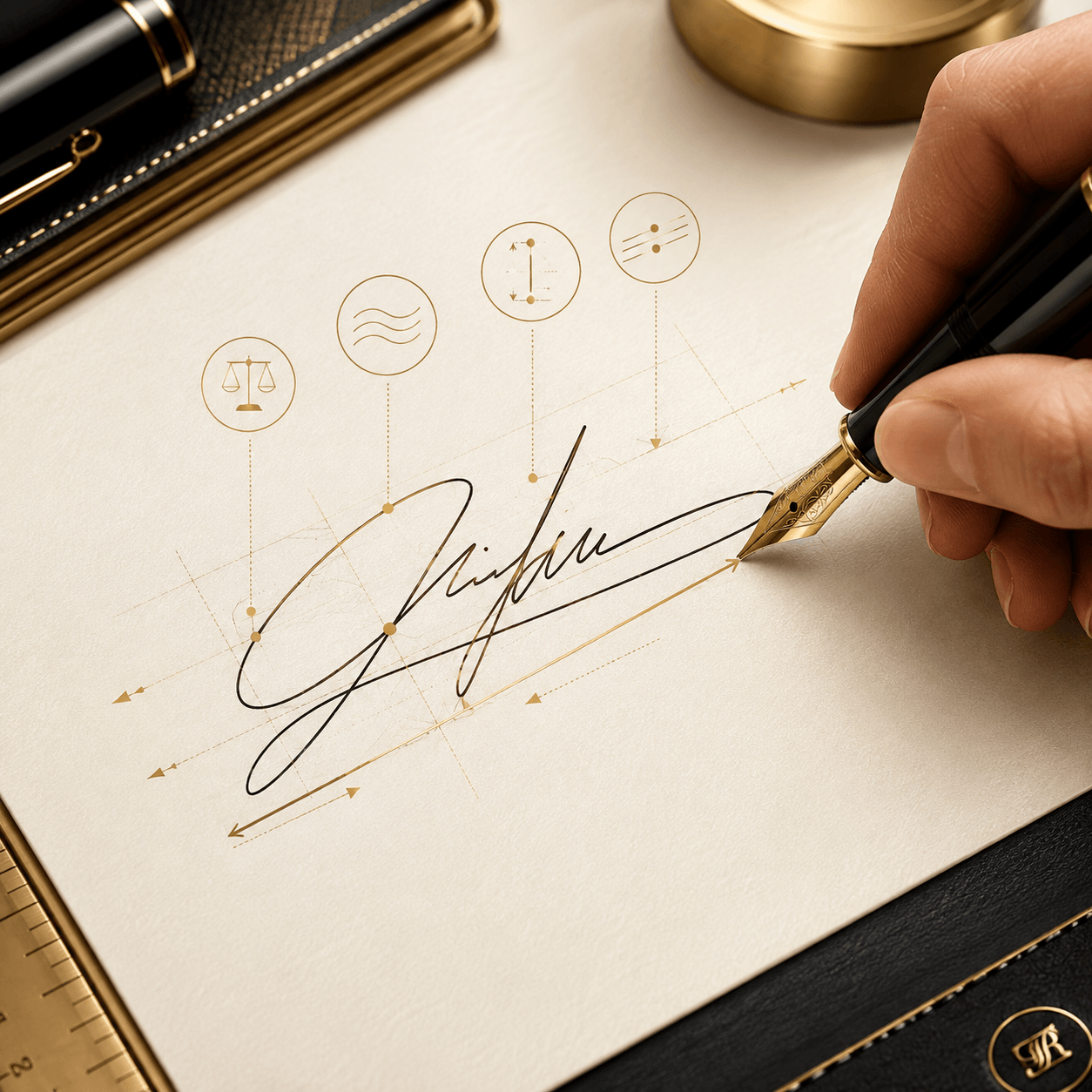
5 Powerful Reasons to Redesign Your Signature
A signature is personal, but that doesn't mean it has to remain unchanged forever.
There are several practical reasons why someone may decide to create a new signature or improve their existing one. The right reason will be different for every person, but the objective is often the same: to create a signature that feels more intentional, practical, and aligned with who they are today.
Here are five powerful reasons to consider a signature redesign.
1. Your Signature Looks Outdated
Your current signature may belong to an earlier chapter of your life.
Perhaps you created it when you were a teenager or a student. Since then, your career, personality, responsibilities, and professional identity may have changed significantly.
An outdated signature isn't necessarily a bad signature. But if it no longer feels like "you," that is a valid reason to explore a new design.
A modern professional signature design can help you create a signature that feels more appropriate for your current identity.
2. Your Signature Is Too Complicated
Some people create signatures with so many loops, strokes, and movements that signing becomes a task in itself.
If you need to consciously remember every movement, your signature may not be practical.
This becomes particularly inconvenient for people who sign documents frequently.
A good signature redesign can focus on simplifying unnecessary movements while maintaining a distinctive personal appearance.
The goal is not to remove personality.
The goal is to remove unnecessary complexity.
3. You Cannot Reproduce Your Signature Consistently
Imagine signing your name on an important document today and producing a completely different version tomorrow.
This can happen when your signature is too complicated, poorly practiced, or naturally inconsistent.
A redesigned signature should ideally be easy enough for you to reproduce repeatedly.
Consistency is especially valuable for professionals, entrepreneurs, business owners, and people who regularly deal with paperwork.
4. Your Professional Identity Has Changed
Your signature may have been perfectly suitable for your previous career but may not feel appropriate for your current role.
A student may become a professional.
A professional may become an entrepreneur.
An employee may become a consultant.
A freelancer may become a business owner.
A coach may build a personal brand.
As your professional identity develops, you may naturally want your signature to feel more mature and intentional.
This is one reason professional signature redesign can be particularly relevant for entrepreneurs, consultants, coaches, executives, and creators.
5. You Simply Want a Signature You Feel Proud to Use
Not every reason has to be complicated.
Sometimes, you simply don't like your current signature.
Maybe you see someone else's elegant signature and realize that you would like something more refined.
Maybe your current signature feels rushed or messy.
Maybe you have always wanted a signature that looks distinctive but never knew how to create one.
That's enough reason to explore your options.
Your signature is your personal mark. You should feel comfortable using it.
The Bigger Idea
Redesigning your signature isn't about chasing a magical transformation.
It is about intentionality.
Instead of accepting the signature you created years ago, you can consciously evaluate it and decide whether it still serves you well.
You can make it simpler.
You can make it more consistent.
You can make it more practical.
You can develop a distinctive style.
And you can create a signature that feels more aligned with the person you have become.
If you have been thinking, “I want to redesign my signature, but I don't know where to start,” getting the right guidance can make the process much easier and more structured.

How a Better Signature Can Improve Your Personal Presentation
A signature may be only a few strokes on paper, but the way those strokes come together can influence how your name is visually presented.
This is especially relevant when your signature appears in professional or formal situations.
Think about a business owner signing an agreement, a consultant signing a proposal, a coach signing a certificate, or a professional approving an important document.
In each situation, the signature becomes part of the overall presentation.
That doesn't mean a redesigned signature will automatically transform your career, income, personality, or destiny. There is no need to make exaggerated promises.
The real opportunity is much more practical: you can create a signature that looks intentional, feels comfortable, and represents your name consistently.
A More Professional Appearance
Your signature can contribute to the overall appearance of documents and personal correspondence.
A signature that is clean, balanced, and consistently reproduced can create a more polished impression than a rushed or constantly changing signature.
For professionals and entrepreneurs, this can be particularly useful because personal presentation often matters across multiple touchpoints.
Your signature becomes another small detail that reflects attention to presentation.
Greater Confidence When You Sign
There is also a simple psychological benefit to using something you genuinely like.
When you have spent time developing a signature that feels natural and personal, you may feel more comfortable using it.
Instead of thinking:
“I don't like how my signature looks.”
you can approach it with:
“This is my signature, and I am comfortable using it.”
That confidence does not come from the signature magically changing your life. It comes from intentionally choosing and practicing something that represents you.
Better Consistency
One of the most practical benefits of a good signature redesign is consistency.
When your signature is simple enough to reproduce naturally, you have a better chance of maintaining the same general structure every time you sign.
This is useful when your signature appears across professional documents, records, correspondence, certificates, and other situations where consistency matters.
Stronger Personal Branding
For entrepreneurs, coaches, consultants, authors, speakers, and creators, a signature can also become part of a broader personal branding system.
Your name is your identity.
Your logo represents your business.
Your visual identity represents your brand.
And your signature can become a personal mark associated with your name.
A distinctive signature may be incorporated into certain appropriate branding materials, certificates, handwritten notes, books, or personal communication.
It should not replace a professional logo or formal brand identity, but it can complement your overall presentation.
A Signature That Matches Your Current Identity
Perhaps the most important question is not:
“Does my signature look impressive?”
Instead, ask:
“Does this signature feel right for the person I am today?”
If you are now a business owner, your signature may need to feel more professional.
If you are building a personal brand, you may want something distinctive.
If you sign frequently, you may prioritize speed and simplicity.
If your current signature is difficult to reproduce, you may want a more practical design.
The ideal personalized signature design depends on your needs.
There is no single signature style that is perfect for everyone.
Don't Confuse Design With Destiny
The internet is full of claims about signatures supposedly guaranteeing wealth, success, luck, relationships, or a particular future.
It is important to separate those claims from the practical purpose of signature design.
A redesigned signature cannot substitute for action.
It cannot replace expertise, discipline, strategy, persistence, or good decisions.
What it can do is give you a thoughtfully designed personal mark that you can use with greater comfort, consistency, and confidence.
And sometimes, meaningful personal improvement starts with something very simple:
Taking a closer look at the things you have been doing automatically for years—and deciding to do them more intentionally.
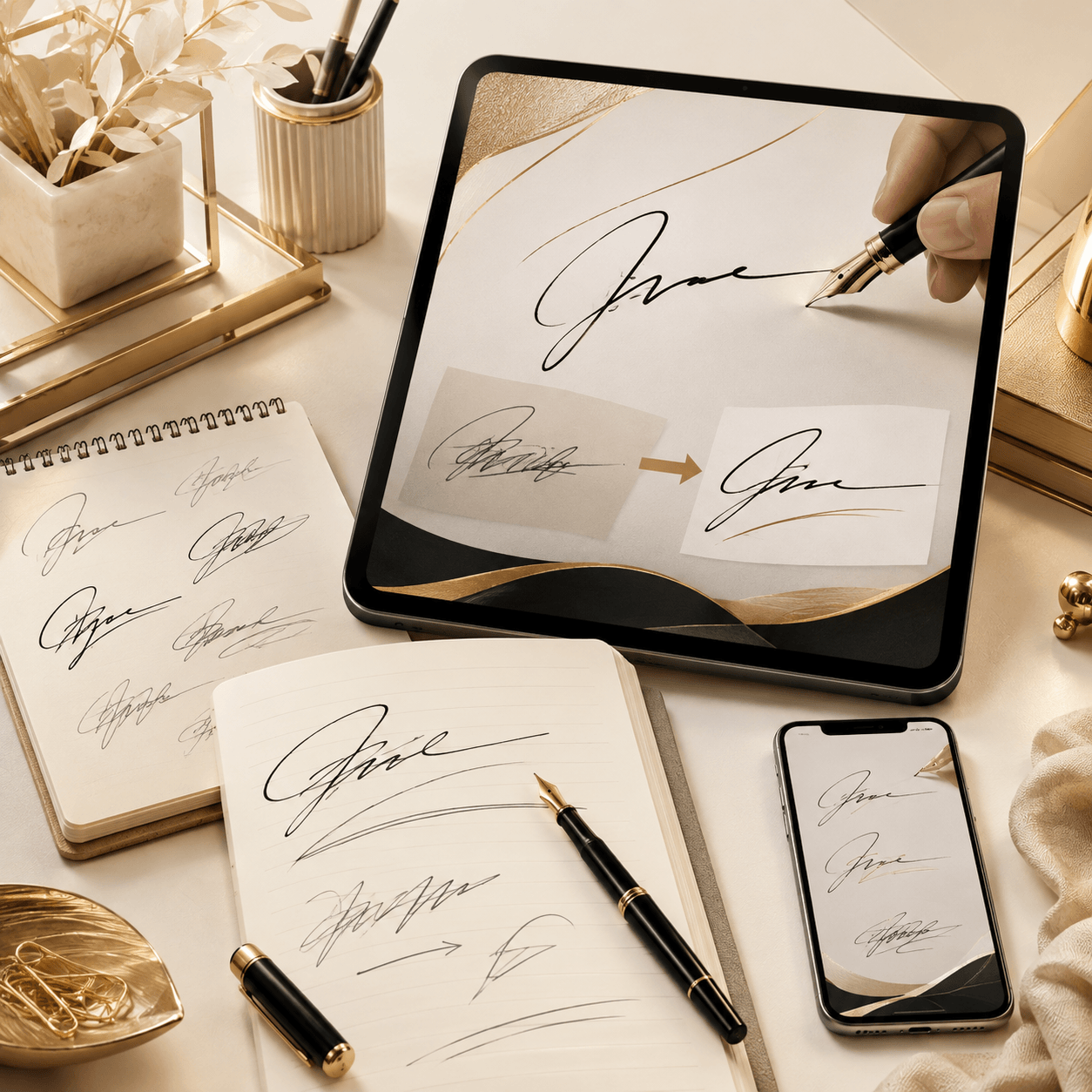
What Makes a Good Professional Signature?
A good signature does not have to be complicated, oversized, or difficult to understand.
In fact, the best signature for you is often the one that successfully balances personality, practicality, consistency, and visual appeal.
Before you redesign your signature, it helps to understand what you should actually look for.
1. It Should Be Comfortable to Write
Your signature is something you may need to reproduce repeatedly.
If every stroke requires conscious effort, the design may become frustrating over time.
A good signature should feel reasonably natural when you write it.
Try writing your proposed signature several times.
Does your hand move comfortably?
Can you maintain the same general structure?
Does it feel natural at different writing speeds?
These are important practical questions.
2. It Should Be Distinctive
Your signature should have a personal character.
That doesn't mean it needs to look artistic or dramatically different from ordinary handwriting.
Even small details can create distinction:
The way your initials are formed
The movement of your first letter
The overall flow
The ending stroke
The spacing between elements
The proportion of the signature
The objective is to develop something that feels like your signature, not a copied design.
3. It Should Be Reasonably Simple
Complexity is not the same as quality.
A signature with dozens of strokes may look impressive in a photograph but become difficult to reproduce in everyday situations.
When considering signature redesign, ask yourself:
“Can I write this naturally without thinking about every individual movement?”
If the answer is yes, you're moving toward a more practical signature.
4. It Should Be Consistent
Consistency is one of the most important characteristics of an effective signature.
You should be able to reproduce the general structure repeatedly.
It doesn't need to be mathematically identical every time. Handwriting naturally varies.
But the important features should remain recognizable.
Practice is therefore an essential part of creating a new signature.
5. It Should Look Appropriate for Your Purpose
Your signature may be used in different environments.
A playful signature might work for personal artwork but may not be ideal for formal business documents.
Similarly, an extremely formal signature may not feel natural for everyday personal use.
Consider where you will use your signature most frequently.
For a business professional, entrepreneur, coach, consultant, or executive, a clean and professional appearance may be particularly important.
6. It Should Be Easy to Remember
A well-designed signature should not feel like a complicated drawing that you have to memorize.
You should understand its basic structure.
For example, you may have:
Initial → Name Flow → Distinctive Ending
Once the movement becomes familiar, repetition becomes much easier.
The Signature Redesign Checklist
Before finalizing a new signature, ask yourself these questions:
Comfort: Can I write it naturally?
Simplicity: Is it unnecessarily complicated?
Distinctiveness: Does it have a personal character?
Consistency: Can I reproduce it repeatedly?
Professionalism: Is it appropriate for my work and lifestyle?
Practicality: Can I use it quickly when necessary?
Confidence: Do I genuinely feel comfortable using it?
If your answer is "yes" to most of these questions, you are likely moving in the right direction.
Remember One Important Principle
The goal of professional signature design is not to create the most complicated signature possible.
It is to create a signature that works for you.
A beautiful signature that you cannot reproduce consistently is not necessarily a good signature.
A simple signature that feels natural, distinctive, professional, and repeatable can be far more useful.
Design it thoughtfully. Practice it consistently. And make it your own.
How to Redesign Your Signature Step by Step
Redesigning your signature doesn't have to be a confusing process.
You don't need to sit with a blank sheet of paper and randomly try hundreds of different styles. A better approach is to follow a simple, structured process that helps you move from your existing signature to a version that feels more natural, distinctive, and practical.
Here is a step-by-step approach to redesign your signature.
Step 1: Look at Your Current Signature
Before creating something new, study what you already have.
Write your current signature several times on a piece of paper.
Don't try to make it beautiful. Write it naturally, the way you normally sign.
Then ask yourself:
What do I like about it?
What don't I like?
Which parts are difficult to write?
Does it take too long?
Does it look consistent?
Is it appropriate for my current professional identity?
This evaluation gives you a starting point.
Step 2: Decide What You Want to Improve
Don't redesign everything simply for the sake of changing it.
Identify the specific problems you want to solve.
Maybe you want a simpler signature.
Maybe you want it to look more professional.
Maybe you want greater consistency.
Maybe you want a more distinctive style.
Maybe you want something that is faster to write.
Your objective will influence the design decisions you make.
Step 3: Experiment With Different Styles
Now start exploring possibilities.
Try variations using your initials, first name, surname, or combinations of these elements.
Experiment with:
Letter size
Spacing
Initials
Underlines
Connecting strokes
Ending strokes
Overall width
Writing speed
Don't immediately select the first version you create.
Create several variations and compare them.
Step 4: Focus on Practicality
This is where many people make a mistake.
A signature may look fantastic when written slowly, but can become completely impractical when you need to sign quickly.
Test your designs at normal writing speed.
Then try them several times in succession.
If the signature becomes difficult to reproduce, simplify it.
Remember:
A signature is meant to be used, not just admired.
Step 5: Select Your Strongest Version
After experimenting with different options, choose the version that gives you the best balance of appearance and usability.
Don't necessarily choose the most complicated version.
Instead, choose the one that feels:
Natural
Comfortable
Distinctive
Professional
Repeatable
This becomes the foundation of your new signature.
Step 6: Practice the New Signature
Changing your signature is not complete when you design it.
You need to build familiarity with it.
Write it repeatedly.
Start slowly.
Then gradually increase your writing speed.
Focus on maintaining the key characteristics of the design rather than trying to reproduce every tiny detail perfectly.
With repetition, the movement can become more automatic.
Step 7: Build Consistency
Once you have selected your new signature, avoid constantly changing it.
Give yourself time to become comfortable with the design.
Practice it in different situations and on different types of paper.
The objective is to develop a reliable signature pattern that you can reproduce naturally.
A Simple 7-Day Practice Routine
You can make the learning process easier with a short daily routine.
Day 1: Write your new signature 20 times slowly.
Day 2: Focus on the first letter and overall flow.
Day 3: Practice the complete signature at a comfortable speed.
Day 4: Write it repeatedly without looking at an example.
Day 5: Practice maintaining consistency while writing faster.
Day 6: Test it in different sizes.
Day 7: Choose your natural writing speed and repeat the signature until it feels comfortable.
The number of repetitions isn't a guarantee of mastery. Everyone learns differently. The purpose of the routine is simply to develop familiarity and consistency.
When You Need Expert Guidance
You can certainly experiment with your signature yourself.
However, if you are unsure which style suits your name, profession, writing habits, or practical requirements, personalized guidance can make the process easier.
A signature redesign expert can help you evaluate different possibilities and provide structured guidance instead of leaving you to experiment randomly.
The most important thing is to choose someone who focuses on practical, personalized signature design rather than making unrealistic promises about what a signature can magically accomplish.
Your signature is your personal mark. Design it intentionally, practice it patiently, and use it confidently.
How to Choose the Right Signature Redesign Expert
Redesigning your signature can be a simple personal project, but sometimes you want more than random experimentation.
You may have tried several styles and still feel confused.
You may want a signature that suits your professional identity.
You may want personalized guidance instead of copying a signature you found online.
This is where working with a signature redesign expert can be valuable.
But how do you choose the right person?
Not everyone who offers signature design or signature analysis follows the same approach. Before choosing an expert, look beyond attractive promises and focus on the quality of the process.
Look for a Personalized Approach
Your signature is personal.
A signature that looks excellent on someone else may not feel natural when you write it.
Therefore, a good signature redesign expert should consider your individual requirements rather than simply giving you a generic template.
The process should take into account factors such as your existing signature, writing comfort, professional requirements, preferred style, and practical usage.
Personalization is one of the biggest differences between thoughtful signature redesign and simply copying a design from the internet.
Look for Practical Guidance
A signature isn't a logo that only needs to look good.
You have to write it.
Again and again.
That makes usability extremely important.
A good professional signature redesign process should consider whether you can actually reproduce the signature comfortably and consistently.
Ask yourself:
Can I realistically use this signature every day?
If the answer is no, the design may need refinement.
Look for Experience and a Clear Methodology
Experience matters because signature design involves more than making random decorative strokes.
A credible expert should be able to explain the reasoning behind their recommendations in a clear and understandable way.
You should be able to understand:
What is being changed?
Why is it being changed?
How should you practice it?
How can you reproduce it consistently?
What makes the proposed design practical?
A clear methodology creates confidence because you understand the process rather than simply being asked to trust a promise.
Be Careful With Guaranteed Results
This is particularly important.
You may come across claims that changing your signature will automatically bring wealth, business success, fame, luck, relationships, or dramatic changes in your life.
Be cautious with guarantees of this kind.
A signature is not a substitute for action, skills, business strategy, financial planning, discipline, or professional expertise.
A responsible signature design expert should set realistic expectations.
The purpose of redesigning your signature can be to create a more intentional, practical, distinctive, and personally suitable way of presenting your name.
Look for Support After the Design
Creating a signature is only part of the process.
You also need to learn it.
If the new signature is unfamiliar, you may initially struggle with speed, consistency, or specific strokes.
That's why guidance on practice and implementation can be valuable.
The best signature redesign experience should not leave you wondering:
“Now what do I do with this design?”
You should understand how to practice it and gradually make it natural.
What Should You Ask Before Choosing an Expert?
Before working with anyone, consider asking:
Is the signature design personalized for me?
What process do you follow for redesigning a signature?
Will the design be practical for everyday use?
Will I receive guidance on practicing the new signature?
What results should I realistically expect?
Can you explain the reasoning behind your recommendations?
The answers can tell you a lot about the quality and philosophy of the service.
Choose Guidance, Not Magical Promises
The best signature redesign expert for you is not necessarily the person making the biggest promises.
Look for someone who understands that your signature needs to work in the real world.
Someone who focuses on your individual requirements.
Someone who helps you understand the design.
Someone who helps you practice it.
And someone who keeps expectations realistic.
Because the ultimate goal is simple:
Create a signature that feels like yours, works for you, and represents your name with confidence and consistency.
Download the Free Guide to Redesign Your Signature
If you have reached this point, you may already be looking at your current signature differently.
Perhaps you have realized that it is too complicated.
Perhaps it feels outdated.
Perhaps you want something more professional.
Or perhaps you simply want to explore what is possible before making a decision.
That's exactly where a practical guide can help.
Instead of randomly experimenting with different strokes and styles, you can learn the key principles that can help you approach signature redesign more thoughtfully.
Start With the Right Knowledge
A good signature redesign begins with understanding what you are trying to improve.
You need to think about your current signature, your preferred style, how comfortably you write, how frequently you sign documents, and how easily you can reproduce a new design.
The right information can help you avoid common mistakes and approach the process with greater clarity.
That's why we have created a Free Guide to Redesign Your Signature.
The guide is designed to help you understand the fundamentals of creating and improving your signature so that you can begin the process with a clearer direction.
What Can You Learn From the Guide?
The guide can help you explore important questions such as:
What should you consider before redesigning your signature?
What makes a signature practical and professional?
How can you approach different signature styles?
What mistakes should you avoid?
How can you practice a new signature?
How can you work toward greater consistency?
What should you consider when choosing professional signature guidance?
Whether you are a student, professional, entrepreneur, coach, consultant, creator, or business owner, these principles can help you think more intentionally about your personal signature.
Don't Randomly Copy Someone Else's Signature
One of the easiest mistakes is searching online for an attractive signature and trying to copy it.
It may look impressive on someone else.
But that doesn't mean it will feel natural when you write it.
Your handwriting movement is unique.
Your name is unique.
Your professional requirements are unique.
Your signature should therefore be developed with your own practical needs in mind.
The goal isn't to find the most complicated signature on the internet.
The goal is to understand how to create a signature that you can actually use.
Take the First Step
If you have been searching for how to redesign your signature, don't keep experimenting without a clear direction.
Download the Free Guide to Redesign Your Signature and use it as your starting point.
Download the Free Guide to Redesign Your Signature
Your next signature doesn't have to be a random variation of the one you have always used.
It can be a conscious choice.
It can be practical.
It can be distinctive.
And most importantly, it can feel like your signature.
Start learning. Start experimenting. Start redesigning your signature with intention.
Frequently Asked Questions About Signature Redesign
If you're considering changing your signature, you probably have a few questions before you begin. Here are answers to some of the most common questions about signature redesign.
Why should I redesign my signature?
You may want to redesign your signature because it feels outdated, complicated, inconsistent, difficult to write, or unsuitable for your current professional identity.
A redesigned signature can be more practical, distinctive, comfortable, and consistent.
You don't need to change your signature simply because someone else has a better-looking one. The decision should be based on what works for you.
How do I redesign my signature?
Start by evaluating your current signature.
Identify what you like and what you want to improve. Then experiment with different letter formations, initials, spacing, flow, size, and ending strokes.
Create several variations, select the most practical option, and practice it repeatedly until it becomes comfortable and consistent.
What makes a good professional signature?
A good professional signature should ideally be:
Comfortable to write
Reasonably simple
Distinctive
Consistent
Appropriate for your professional identity
Easy enough to reproduce
Visually balanced
The most important factor is practicality. A signature that looks impressive but is difficult to reproduce may not be the best choice.
Should my signature be simple or complicated?
In most cases, practicality should take priority over unnecessary complexity.
A signature can be distinctive without containing dozens of decorative strokes.
If you sign frequently, a simpler design may be particularly convenient because it can be written more naturally and consistently.
Can I create a new signature myself?
Yes.
You can experiment with your signature yourself by trying different variations and practicing them.
However, if you feel confused about which direction to take or want personalized guidance, working with a signature redesign expert can make the process more structured.
How long does it take to learn a new signature?
There is no universal timeframe.
It depends on the complexity of the new signature, how frequently you practice, and how naturally the movements fit your handwriting.
Regular practice can help you become more comfortable with a new design.
The objective is not to memorize a drawing. It is to develop a natural writing movement.
Is signature redesign useful for professionals and business owners?
It can be particularly relevant for people who regularly use their signature in professional situations.
Entrepreneurs, consultants, coaches, executives, authors, freelancers, and other professionals may want a signature that feels more polished, distinctive, and aligned with their current professional identity.
How do I find the best signature redesign expert?
Look for an expert who provides personalized guidance, explains their methodology clearly, focuses on practical usability, and helps you understand how to practice the new signature.
Be cautious about anyone who guarantees that changing your signature will automatically create wealth, success, luck, or dramatic life changes.
A responsible signature design expert should help you understand what signature redesign can realistically accomplish.
Can a signature become part of personal branding?
Yes.
For entrepreneurs, coaches, consultants, authors, speakers, and creators, a distinctive signature can sometimes complement their personal branding.
It can be used appropriately in handwritten notes, certificates, books, certain creative materials, or other personal brand applications.
However, a signature should complement—not replace—your broader visual identity and branding strategy.
Where can I learn more about redesigning my signature?
If you want a structured starting point, download the Free Guide to Redesign Your Signature.
The guide can help you understand important principles of signature redesign and give you a clearer direction before you begin experimenting with a new signature.
Download the Free Guide to Redesign Your Signature and start exploring your options today.
Your Signature, Your Choice
Your signature is something you may use for years.
So don't treat it as something you have to accept simply because you've always used it.
Look at it.
Evaluate it.
Improve what needs improvement.
Practice what you create.
And choose a signature that is comfortable, distinctive, practical, and genuinely yours.
A signature is more than a few strokes on paper. It is the way you choose to put your name forward.
FAQs About Signature Redesign
1. What is signature redesign?
Signature redesign is the process of reviewing and improving your existing signature to create a version that is more practical, distinctive, comfortable, consistent, and suitable for your personal or professional needs.
2. Why should I redesign my signature?
You may consider redesigning your signature if your current signature looks outdated, feels difficult to write, takes too long, lacks consistency, or no longer represents your current professional identity.
3. How can I redesign my signature?
Start by evaluating your current signature, identify what you want to improve, experiment with different styles, select a practical design, and practice it consistently until it becomes natural.
4. How do I create a professional signature?
A professional signature should generally be comfortable, distinctive, reasonably simple, consistent, and appropriate for your professional environment. Practicality should be prioritized over unnecessary complexity.
5. What is a professional signature design?
Professional signature design focuses on creating a signature that looks intentional and polished while remaining practical enough to reproduce consistently in everyday professional situations.
6. Can I change my signature legally?
In many situations, people can adopt a new signature, but the requirements for formally changing or updating a signature can vary depending on the country, organization, document, or financial institution. Check the relevant requirements before using a new signature on important official records.
7. Is it okay to change my signature?
Yes, people may choose to change their signature for personal or professional reasons. However, if your signature is used for official records, financial documents, contracts, or identification purposes, check whether the relevant organization requires you to update your signature formally.
8. How often should I change my signature?
There is no universal rule requiring you to change your signature at a particular interval. If your current signature works well, you may keep it. Consider redesigning it when it no longer feels practical or appropriate.
9. Should I redesign my signature after changing my career?
You can. A career change may be a natural opportunity to reconsider your personal presentation, particularly if your existing signature was created much earlier in your professional life.
10. Can entrepreneurs benefit from signature redesign?
Entrepreneurs who frequently sign business documents may find a practical, consistent signature useful for professional presentation and everyday convenience.
11. Is signature redesign useful for coaches?
Yes. Coaches and consultants may want a signature that complements their professional identity and personal brand while remaining easy to reproduce.
12. What makes a signature look professional?
A professional-looking signature usually has intentional structure, balanced proportions, reasonable simplicity, distinctive features, and consistent execution.
13. Should my full name be in my signature?
Not necessarily. Some people use their full name, while others use initials, a first name, surname, or a combination. The best approach depends on your personal preference and practical requirements.
14. Is a short signature better?
A short signature can be convenient, particularly if you sign frequently. However, short does not automatically mean better. The design should balance convenience with distinctiveness and usability.
15. Is a long signature better?
Not necessarily. A longer signature can look distinctive, but excessive length may make it slower or more difficult to reproduce consistently.
16. Should my signature be easy to read?
Complete readability is not always necessary for a signature. However, a deliberate and recognizable structure can be useful, particularly in professional contexts.
17. Can I make my signature more stylish?
Yes. You can experiment with letter formations, spacing, proportions, connecting strokes, initials, and finishing strokes to create a more distinctive signature style.
18. How can I make my signature look elegant?
An elegant signature often benefits from controlled movement, balanced spacing, smooth letter formation, and simplicity. Elegance does not require excessive decoration.
19. How can I make my signature look unique?
You can explore distinctive initials, personalized letter formations, unique connections between letters, controlled finishing strokes, and a consistent overall shape.
20. How can I make my signature more simple?
Remove unnecessary loops, excessive strokes, and complicated movements. Focus on the essential elements of your name and create a design that you can reproduce comfortably.
21. How can I make my signature faster to write?
Reduce unnecessary movements and practice the signature as a continuous natural motion. A simpler structure can make repeated signing easier.
22. How can I make my signature consistent?
Choose a clear structure and practice it repeatedly. Focus on maintaining the important features of the signature rather than attempting to reproduce every tiny detail identically.
23. How long does it take to learn a new signature?
There is no fixed timeframe. Some people become comfortable quickly, while others need more practice. Regular repetition generally helps develop familiarity and consistency.
24. How many times should I practice my new signature?
There is no scientifically established number that guarantees mastery. Instead of focusing only on repetition counts, practice until the signature feels natural and can be reproduced consistently.
25. Can I redesign my signature online?
You can research signature styles and receive online guidance, but make sure any proposed design is practical for your own handwriting and can be reproduced naturally.
26. What is the best signature style?
There is no single best signature style for everyone. The best signature is one that suits your preferences, writing habits, professional requirements, and practical needs.
27. What is the best signature for business owners?
A business owner may prefer a signature that is professional, distinctive, comfortable, and easy to reproduce consistently. The ideal design depends on the individual's name and writing style.
28. What is the best signature for professionals?
Professionals may benefit from a signature that combines simplicity, professionalism, consistency, and personal character.
29. What is the best signature for personal branding?
A personal-brand signature should feel distinctive and authentic while remaining practical. It can complement your wider visual identity without replacing your professional branding system.
30. How do I choose a signature redesign expert?
Look for a signature redesign expert who offers personalized guidance, explains the design process clearly, focuses on practical usability, and avoids unrealistic guarantees.
31. What does a signature design expert do?
A signature design expert can help evaluate your existing signature, explore suitable design directions, refine specific elements, and guide you toward a signature that is practical and personalized.
32. How much does signature redesign cost?
The cost varies depending on the provider, level of personalization, consultation format, and services included. Compare the methodology, support, and deliverables rather than choosing solely based on price.
33. Can someone design a signature for me?
Yes. You can seek personalized assistance from a professional who specializes in signature design or signature redesign.
34. Should I copy a famous person's signature?
No. Your signature should be personal and practical. Copying another person's signature can also create serious legal and ethical problems, particularly when used for official purposes.
35. Can I use a signature generator?
Signature generators can provide inspiration and ideas, but the result may not be comfortable or practical for your handwriting. A generated design should be treated as inspiration rather than an automatically perfect signature.
36. Are digital signatures the same as handwritten signatures?
No. A digital signature is a technology-based method of authentication or signing electronic documents, while a handwritten signature is a personal mark created by hand. They serve different purposes and may be subject to different legal requirements.
37. Can I use my redesigned signature on official documents?
You may be able to, but requirements vary by document and organization. For important official, financial, legal, or identity-related documents, check the applicable rules before adopting a new signature.
38. Can I use two different signatures?
Using different signatures in different contexts can create confusion. For important official or financial matters, consistency is generally preferable, and you should follow the requirements of the relevant institution.
39. Should my signature match my handwriting?
Not necessarily. A signature can be more stylized than ordinary handwriting. However, it should remain comfortable enough for you to reproduce naturally.
40. Can signature redesign improve confidence?
Creating a signature you genuinely like may improve your comfort and confidence when using it. However, this is a personal experience rather than a guaranteed psychological outcome.
41. Can changing my signature change my personality?
There is no reliable basis for claiming that changing your signature automatically changes your personality. Signature redesign should primarily be approached as a practical and personal design choice.
42. Can signature redesign make me successful?
A redesigned signature cannot guarantee business success, wealth, fame, or career advancement. Success depends on many factors including skills, decisions, execution, persistence, opportunity, and circumstances.
43. Can a signature attract wealth or money?
Claims that a particular signature automatically attracts wealth should be treated cautiously. A signature can be designed for practical and aesthetic reasons, but financial success requires real-world action and sound financial decisions.
44. Is signature analysis the same as signature redesign?
No. Signature analysis may involve interpreting handwriting or signature characteristics, while signature redesign focuses on creating or refining the way a person writes their name.
45. Is signature redesign the same as graphology?
Not necessarily. Graphology is associated with interpreting handwriting characteristics, whereas signature redesign is primarily concerned with designing and practicing a signature. Different practitioners may combine these approaches, so it is important to understand exactly what a service includes.
46. What mistakes should I avoid when redesigning my signature?
Avoid making the signature unnecessarily complicated, copying someone else's design, choosing a style you cannot reproduce consistently, changing it repeatedly without practice, and believing unrealistic promises about guaranteed life outcomes.
47. Where can I learn how to redesign my signature?
You can learn through educational resources, practical guides, structured tutorials, or personalized guidance from a signature design professional. A Free Guide to Redesign Your Signature can be a useful starting point for understanding the process.
48. Is there a free guide to redesign your signature?
Yes. If you want to understand the fundamentals before creating a new signature, you can download the Free Guide to Redesign Your Signature and use it as a starting point for your signature redesign journey.
49. What should I do before choosing a new signature?
Evaluate your current signature first. Identify what you like, what you dislike, how frequently you sign, where you use your signature, and what you want your redesigned signature to achieve practically.
50. What is the most important thing to remember about signature redesign?
The most important principle is simple:
Your signature should work for you.
It should be practical enough to use, comfortable enough to write, distinctive enough to feel personal, and consistent enough to reproduce naturally.
Don't redesign your signature because someone promises that it will magically change your life.
Redesign it because you want to make a conscious choice about how you present your name.
If you're ready to explore the process, start with the Free Guide to Redesign Your Signature, understand the fundamentals, experiment thoughtfully, and practice your chosen design consistently.

Building stronger digital visibility, smarter marketing systems and meaningful growth opportunities for businesses across industries.
BE VISIBLE. BE RELEVANT. BE REMEMBERED.