
Kamiya Jani: The Curly Tales Digital Empire Story
From Business News Anchor to Digital Entrepreneur
What if your successful career is not the end of your story?
What if the thing you love can become your biggest business?
This is the story of Kamiya Jani, the founder of Curly Tales.
Today, millions of people know Curly Tales for food, travel, restaurants, hotels, experiences, and celebrity conversations.
But Curly Tales did not start as a big company.
There was no huge office.
There was no large production team.
There was no giant business machine.
It started with one woman, one idea, and a strong love for travel and stories.
And that woman was Kamiya Jani.
A Successful Career Was Not Enough
Before starting Curly Tales, Kamiya had a strong career in television and business news.
She worked as a business journalist and TV anchor. Her professional journey included media brands such as ET NOW, Bloomberg TV, and CNBC TV18/Network18. Curly Tales also describes her earlier career as a business journalist and television anchor.
On paper, this was a very good career.
She had a respected job.
She had experience.
She had a professional name.
She had a clear career path.
But something was missing.
She wanted to travel.
She wanted to explore.
She wanted to meet people.
She wanted to taste local food.
And she wanted to tell stories about these experiences.
This is an important point.
Sometimes, your problem is not that your career is bad.
Sometimes, you simply feel that you can build something of your own.
That feeling can be scary.
Because a safe job gives you comfort.
But your own business gives you freedom with risk.
Kamiya chose the second path.
The Decision to Start Something New
Kamiya has shared that she left her full-time media career in 2016 after around 10 years in the industry.
Curly Tales later described September 30, 2016, as the day she left her job as a business news anchor to explore the world.
Now think about this.
You have worked for years to build a career.
You have a salary.
You have a known profession.
People know what you do.
And then you say:
“I want to start something of my own.”
Sounds exciting today.
But making that decision is not easy.
Most people have ideas.
Most people have dreams.
Most people say:
“I will start one day.”
But that “one day” never comes.
Kamiya actually started.
She bought the CurlyTales.com domain.
She changed her personal Facebook page into a Curly Tales page.
Then she started creating content around her travel experiences.
According to her own account, one of her early Curly Tales trips was to South Africa. She used Facebook Live to share the experience and received a strong response from viewers.
Look at how simple the beginning was.
A trip.
A phone.
An idea.
And the courage to start.
No fancy studio.
No giant camera team.
No million-rupee production setup.
Just action.
The Big Difference in Her Thinking
Now comes the most important part.
Kamiya did not want Curly Tales to become only a personal travel diary.
She wanted people to discover new places, food, and experiences.
That difference sounds small.
But it is actually huge.
A personal travel diary says:
“Look where I went.”
A useful travel platform says:
“Let me show you something you may want to experience.”
The first one is mostly about the creator.
The second one is about the audience.
Curly Tales built its identity around food, travel, and experiences.
It helped people discover restaurants, destinations, hotels, local food, and things to do.
That gave the brand a clear purpose.
And here is a very important business lesson:
People do not follow you only because you are interesting.
They follow you because you give them something they want.
Maybe you save them time.
Maybe you help them make a decision.
Maybe you entertain them.
Maybe you teach them something.
Maybe you help them discover something new.
Curly Tales understood this very well.
From Television to Social Media
But there was another challenge.
Kamiya already understood television.
She understood journalism.
She understood interviews.
She understood storytelling.
But social media was a completely different game.
Kamiya has written about how different the language of social media was from the language she had learned as a television journalist. She had to learn new things and also change some old habits.
This is something many entrepreneurs forget.
Being successful in one field does not mean you automatically understand the next field.
A television audience behaves differently from an Instagram audience.
A newspaper reader behaves differently from a YouTube viewer.
A customer behaves differently from a follower.
The platform changes.
The attention span changes.
The content changes.
So you have to learn again.
Kamiya did exactly that.
She experimented with videos.
She used simple equipment.
She covered restaurants.
She explored street food.
She visited hotels and resorts.
She travelled.
She created stories.
She kept learning.
She did not wait for everything to become perfect.
And that is a powerful lesson for every entrepreneur.
You Do Not Need to Start Perfect
Let us be honest.
Many people want to start a digital business.
But they keep waiting.
“I need a better camera.”
“I need a better website.”
“I need a better logo.”
“I need to learn editing.”
“I need to understand AI.”
“I need to learn marketing.”
“I need to learn everything first.”
And after six months…
Nothing happens.
After one year…
Still nothing.
Because they are preparing to start instead of starting.
Kamiya's early journey shows another way.
Start with what you have.
Then learn.
Then improve.
Then build.
Your first video may be average.
That is okay.
Your first website may not look amazing.
That is okay.
Your first offer may need changes.
That is okay.
You are not supposed to know everything on Day One.
You are supposed to move on Day One.
When Passion Became a Business
At first, Curly Tales was driven by Kamiya's love for travel and storytelling.
But slowly, something bigger happened.
People started watching.
People started following.
People started sharing.
People started trusting the content.
And when an audience starts trusting a platform, something very important happens.
That audience becomes valuable to businesses.
Restaurants want customers.
Hotels want guests.
Tourism boards want visitors.
Food brands want attention.
Travel companies want reach.
And Curly Tales had something these businesses needed:
an audience interested in food, travel, and experiences.
Kamiya has spoken about Curly Tales growing from a passion project into a business, with brands and tourism boards later partnering with the platform.
This is where the story becomes much bigger than travel.
It becomes a lesson in digital business.
The journey looks simple:
Passion → Content → Audience → Trust → Business
First, create something useful.
Then people notice.
Then they return.
Then they trust you.
Then businesses see the value.
Then money can enter the system.
That is how a creator can slowly become an entrepreneur.
The Real Lesson From Kamiya Jani
The biggest lesson is not:
“Start a travel website.”
The lesson is:
“Turn what you know and love into something useful for other people.”
That is the real opportunity in today's digital world.
A teacher can turn knowledge into content.
A coach can turn experience into content.
A fitness expert can turn results into content.
A chef can turn recipes into content.
A business expert can turn lessons into content.
A travel lover can turn discoveries into content.
The subject can be different.
The business thinking can be the same.
Start with something you understand.
Find people who care about it.
Create useful content for them.
Build trust.
Build a community.
Then create products, services, partnerships, and other ways to serve them.
Kamiya Jani did not simply build a travel page.
She started building an audience around a clear interest.
And that audience became the foundation for Curly Tales.
That is why her journey is worth studying.
Because the real story is not about food.
It is not only about travel.
It is about how one person's interest became content, content became an audience, and the audience became a business.
And this leads to the next big question:
What exactly was the idea behind Curly Tales that made it different from thousands of other travel blogs and social media pages?
That is where the real Curly Tales business story begins.
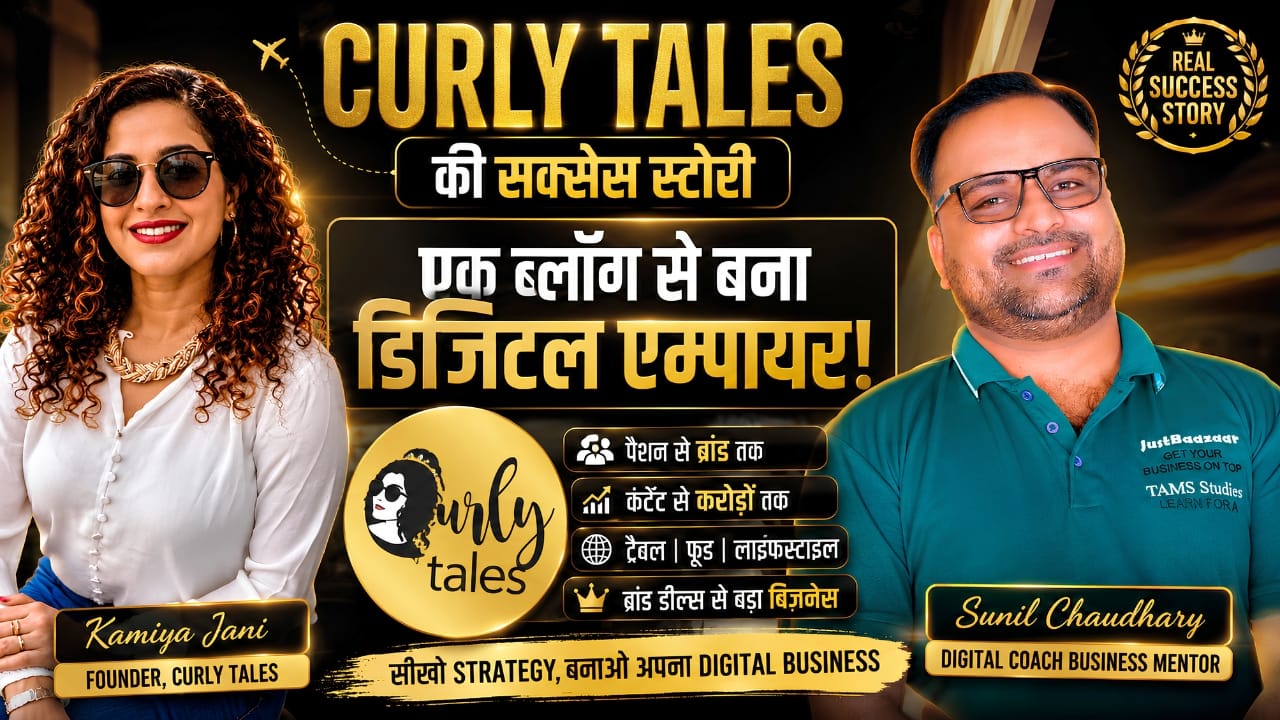
The Big Idea Behind Curly Tales
A lot of people love food.
A lot of people love travel.
And today, almost everyone has a phone to take photos and videos.
So why did Curly Tales stand out?
The answer is simple.
Kamiya Jani did not just show people where she went. She helped people discover where they could go.
That small change made a big difference.
It Was More Than a Travel Blog
When Curly Tales started, the internet already had many travel websites and blogs.
People were already writing about hotels.
People were already reviewing restaurants.
People were already posting travel photos.
So Kamiya needed a different idea.
Instead of making Curly Tales only about her personal travel stories, she built it around food, travel, and experiences.
The idea was simple:
Help people discover something worth trying.
Maybe it was a small food place.
Maybe it was a famous restaurant.
Maybe it was a beautiful hotel.
Maybe it was a new destination.
Maybe it was an unusual experience.
Curly Tales became a place where people could find these ideas.
That made the content useful.
And useful content has a much better chance of getting attention.
Think About Your Own Life
Imagine you are planning a weekend trip.
You have no idea where to go.
You open Instagram.
You search YouTube.
You ask your friends.
You check Google.
You want one simple answer:
“Where should I go?”
This is the problem Curly Tales was helping people solve.
And that is a very important business lesson.
A strong content business usually starts with a simple question:
“What problem can I help people solve?”
You do not always need to solve a huge problem.
Sometimes the problem is very simple.
“I don't know where to eat.”
“I don't know where to travel.”
“I don't know what to experience.”
“I don't know which place is worth my money.”
If you can help people make these decisions, your content becomes useful.
From Information to Discovery
Curly Tales did something smart with this idea.
It made discovery entertaining.
That matters.
Suppose I write:
“Here are 10 restaurants in Mumbai.”
Useful?
Yes.
Exciting?
Maybe not.
Now imagine a video where someone walks into a restaurant, shows the food, talks to the owner, tastes the dish, shows the price, and tells you what makes the place special.
Now you are watching.
You are curious.
You may even send the video to a friend.
That is the power of combining information with entertainment.
Curly Tales built a lot of its content around this idea.
The audience could learn something while enjoying the story.
And that is one reason food and travel content works so well on social media.
People do not only want information.
They want to feel the experience.
The Power of Food
Food became a very important part of the Curly Tales identity.
And honestly, this was a smart choice.
Why?
Because food is emotional.
Everybody eats.
People have favourite foods.
People have childhood food memories.
People love trying something new.
People love talking about restaurants.
And food is highly visual.
Show someone a hot dish.
Show the first bite.
Show the kitchen.
Show the chef.
Show the price.
Show the location.
Suddenly, a simple restaurant becomes a story.
That story can make people curious.
Curiosity can create a visit.
And a visit can create a customer.
This is where content can become much more powerful than a normal advertisement.
The Difference Between an Advertisement and a Story
Think about two messages.
The first says:
“Visit our restaurant. We have amazing food.”
That is an advertisement.
Now imagine someone actually visits the restaurant.
They meet the chef.
They see how the food is made.
They taste the food.
They talk about the history of the place.
They show the special dish.
They tell you how much it costs.
That feels like a story.
And stories are easier to watch.
They are easier to remember.
They are easier to share.
This is one of the strongest ideas behind modern digital marketing.
People do not always want to be sold to. They want to be shown something interesting.
Curly Tales understood this very well.
The Audience Was at the Centre
Another important part of the idea was the audience.
Curly Tales was not built only around:
“Look at Kamiya.”
It was built around:
“Look what you can discover.”
That is a big difference.
A founder-led brand can get attention because people like the founder.
But a strong media brand can grow when the audience starts caring about the subject itself.
Curly Tales created a world around food, travel, and experiences.
Kamiya became an important face of that world.
But the brand could cover much more than one person.
That gave it room to grow.
A Niche Does Not Mean a Small Business
This is another lesson entrepreneurs should understand.
People often hear the word niche and think:
“Why should I make my audience smaller?”
But a niche can actually make your brand stronger.
Imagine someone says:
“I create content about everything.”
What do you remember?
Nothing.
Now someone says:
“I help you discover amazing food, travel places, and experiences.”
Much clearer.
You know what to expect.
You know why you should follow.
You know what kind of content you will get.
That clarity helps build an audience.
Curly Tales had a clear space in the market.
It was not trying to become everything for everyone.
It built a strong identity around food, travel, and experiences.
Content Was the Engine
Once the idea was clear, content became the engine.
Every restaurant could become a story.
Every trip could become a story.
Every hotel could become a story.
Every experience could become a story.
Every interesting person could become a story.
This is a very powerful model.
Because one business idea can create hundreds or thousands of content opportunities.
And when you have more content opportunities, you have more chances to reach new people.
That is exactly what a strong digital media business needs.
Not one viral video.
Not one lucky post.
But a repeatable content system.
Why This Matters for Entrepreneurs
Now forget Curly Tales for a moment.
Think about your own business.
Maybe you are a coach.
Maybe you are a consultant.
Maybe you are a doctor.
Maybe you are a teacher.
Maybe you sell a product.
Ask yourself:
What does my audience want to discover?
Not what you want to sell.
What do they want to know?
What are they confused about?
What decisions are they trying to make?
What mistakes are they making?
What would save them time?
What would make their life easier?
These questions can give you hundreds of content ideas.
For example, a digital marketing coach can create content around:
“How do I get my first 10 leads?”
“How do I choose my niche?”
“Why is my website getting no leads?”
“How do I build a simple funnel?”
“How do I turn knowledge into a coaching business?”
Now you are not simply posting.
You are solving problems.
And that is a much stronger content strategy.
The Curly Tales Content Formula
The idea behind Curly Tales can be simplified into a very useful formula:
Discover → Experience → Tell the Story → Build Trust
First, find something interesting.
Then experience it.
Then tell the story in an easy and entertaining way.
Then let the audience decide whether they want to try it.
Do this again and again.
Over time, people begin to trust your recommendations.
And when trust grows, your brand becomes stronger.
This is why the Curly Tales story is not just a food and travel story.
It is a content business case study.
It shows how a simple interest can become a clear niche.
How a niche can become content.
How content can become an audience.
And how an audience can become a business.
But there was still one big challenge.
Having a good idea is one thing.
Getting people to notice that idea is another thing.
Curly Tales had to find a way to reach people quickly.
And this is where its content strategy became very interesting.
Starting Small: One Person, One Domain, One Vision
Big businesses often have very small beginnings.
When we see a successful company today, we usually see the final picture.
The big team.
The big office.
The famous brand.
The large audience.
The money.
But we do not see the early days.
We do not see the simple phone.
The small room.
The first post.
The first few followers.
The mistakes.
The doubt.
Curly Tales also had a beginning like this.
It started with Kamiya Jani and a simple idea.
It Started With One Person
Kamiya did not start Curly Tales with a huge team.
She had already left her television career.
She had decided to explore travel and build something of her own.
Then came the basic question:
“What should I call this new venture?”
The answer became Curly Tales.
She bought the CurlyTales.com domain and changed her personal Facebook page to the Curly Tales brand. This was one of the first steps in turning a personal interest into a real digital brand.
It may sound like a very small step.
But every business starts with small steps.
A domain name does not create a business.
A Facebook page does not create a business.
A logo does not create a business.
Action creates the business.
And Kamiya started taking action.
The First Content Was Simple
Today, when you watch a professional Curly Tales video, you may see good cameras, clean editing, beautiful locations, interesting guests, and a full production setup.
The early days were very different.
Kamiya used simple tools.
She travelled.
She recorded.
She talked to people.
She showed places.
She shared her experiences.
She even used a selfie stick for some of her early content. In her own account of the journey, she explains how the early Curly Tales videos were made with simple equipment while she travelled and explored.
This is important because many new creators think they need expensive equipment before they can start.
They say:
“I need a better camera.”
“I need a studio.”
“I need a professional editor.”
“I need a big team.”
No.
You need a reason for people to watch you.
A ₹2 lakh camera cannot save boring content.
A beautiful studio cannot fix a weak idea.
And a fancy logo cannot create trust.
Content starts with the idea.
The First Goal Was Not to Look Big
This is something new entrepreneurs can learn from.
In the beginning, your job is not to look like a big company.
Your job is to be useful.
Imagine you have only 100 followers.
That is okay.
If those 100 people really care about your content, you already have something valuable.
Now help those 100 people.
Listen to them.
Understand them.
Create better content.
Then grow to 500.
Then 1,000.
Then 10,000.
Then 100,000.
This is how an audience grows.
You do not need to impress everyone on Day One.
You need to make the first few people say:
“This is useful. I want more.”
One Trip Could Become Many Stories
Travel gave Curly Tales another advantage.
One trip could create many pieces of content.
Suppose Kamiya visited a new city.
That one trip could give her:
A restaurant story.
A local food story.
A hotel story.
A local market story.
A travel tip.
A conversation with a local person.
A short video.
A longer video.
A photo.
A social media post.
A website article.
This is smart content thinking.
You do not always need 100 different ideas.
Sometimes you need one good experience and a system to turn that experience into many useful stories.
This is something every digital entrepreneur should understand.
Your knowledge can also be reused.
One coaching session can become a video.
That video can become a blog.
The blog can become social posts.
Those posts can become short videos.
The same idea can become an email.
One idea can become many digital assets.
That is how you get more value from your work.
Curly Tales Found Its Voice
There was another important change.
Curly Tales did not sound like a formal newspaper.
It did not feel like a boring travel guide.
It became more personal.
More visual.
More conversational.
More fun.
That made the content easier to consume.
People could see the food.
They could see the location.
They could hear the story.
They could see the people behind the business.
This matters because people connect with people, not just information.
If you say:
“Here is a restaurant in Mumbai.”
That is information.
But if you show the restaurant owner talking about how his family started the business, then show the kitchen, the food, the customers, and the history of the place...
Now you have a story.
And stories are easier to remember.
From Mobile Content to Professional Media
The journey did not stay small.
Curly Tales kept growing.
The content became more professional.
The team became bigger.
The brand expanded across platforms.
The company moved beyond simple travel content and built a wider media business around food, travel, experiences, and lifestyle.
But the important thing is this:
The big version came after the small version.
It did not start big.
It became big.
That difference is very important.
Many people look at successful businesses and think:
“I can never build something like this.”
But they are looking at the final building.
They are not looking at the first brick.
Curly Tales also needed a first brick.
That first brick was a simple idea:
Create content around food, travel, and experiences that people would love to discover.
The Power of Starting Before You Are Ready
This is probably one of the biggest lessons from Kamiya Jani's early journey.
You may never feel fully ready.
There will always be something missing.
You may not know marketing.
You may not understand video editing.
You may not know how to sell.
You may not know how to build a funnel.
You may not understand social media.
You may not have a big audience.
Start anyway.
Learn the next thing when you need it.
This does not mean you should be careless.
It means you should not use “I am not ready” as an excuse to never begin.
Curly Tales started small.
Then it learned.
Then it improved.
Then it grew.
The First 500 Followers Matter
Here is a simple way to look at it.
If 500 people are willing to watch your content, you have a small audience.
If those 500 people trust you, you have something more valuable.
If they share your content, you have distribution.
If they ask you questions, you have demand.
If businesses want to reach those people, you have commercial value.
This is why followers alone are not the real goal.
Trust is the real goal.
And Curly Tales slowly built that trust through useful food and travel content.
A Simple Business Formula
The early Curly Tales journey can be understood through a simple formula:
One Person
↓
One Clear Idea
↓
One Niche
↓
Useful Content
↓
Audience
↓
Trust
↓
Brand
↓
Business
That is a powerful journey.
And notice something.
Money does not come first.
The audience does.
Trust does.
Value does.
Then the business opportunities start appearing.
This is a very different way of thinking from:
“What can I sell today?”
A better question is:
“What can I create today that people will value tomorrow?”
That is the thinking behind many strong digital businesses.
The Early Growth Was the Real Turning Point
Once Curly Tales started getting attention, Kamiya and her team had something very important.
Proof.
People were watching.
People were sharing.
People were following.
People were responding.
And that proof made it possible to grow faster.
Curly Tales later reported a major early growth milestone, reaching around 500,000 fans within nine months. The company credited short videos, social media distribution, and a strong focus on food and travel content as important parts of that growth.
That was a major signal.
The idea was working.
The audience was responding.
And now the game was no longer just:
“Can we create content?”
The new question became:
“How big can this become?”
That question changed everything.
Because when a small content project starts showing strong audience growth, it can become much more than a personal passion.
It can become a real media company.
And that is exactly what happened next with Curly Tales.
The next big part of the story is how content became the growth engine and how Curly Tales used short, simple, highly shareable videos to build a large audience.
The Content Strategy That Changed Everything
Having a good idea is one thing.
Getting people to notice that idea is another thing.
Curly Tales had a clear idea.
Food.
Travel.
Experiences.
But there was a big question:
How do you make millions of people notice your content?
This is where the content strategy of Curly Tales became very important.
They Understood the New Internet
Traditional media worked in a different way.
A television channel had a fixed program.
A newspaper had a fixed page.
But social media was different.
People were scrolling fast.
They could skip your video in one second.
They could watch it.
They could share it.
Or they could forget it.
So Curly Tales had to create content that could catch attention quickly.
Kamiya Jani has explained that the team learned how different social media was from traditional media and experimented with new formats, especially short videos.
This was a smart move.
Because on social media, you do not get five minutes to explain why people should care.
Sometimes you get five seconds.
The Power of Short Videos
One of the important early growth ideas of Curly Tales was short-form video.
The company later said that short videos played a major role in its early Facebook growth.
According to Curly Tales, the platform reached around 500,000 fans in just nine months during its early growth period.
That is a big number.
But the bigger lesson is not the number.
The lesson is why people shared the content.
Think about food videos.
You see a huge dosa.
You see a strange street food dish.
You see an old restaurant with an amazing story.
You see a chef making something unusual.
You immediately become curious.
You want to know:
“What is this?”
That curiosity is powerful.
And curiosity makes people stop scrolling.
Curiosity Is a Business Asset
This is one of the biggest lessons from Curly Tales.
A good content creator does not simply give information.
A good content creator creates curiosity.
For example:
Instead of saying:
“Here is a restaurant in Delhi.”
You can say:
“This tiny Delhi shop has been serving the same dish for decades.”
Now I want to know more.
Instead of:
“Here is a hotel in Rajasthan.”
You can say:
“You can actually stay inside this beautiful heritage property in Rajasthan.”
Again, curiosity.
Instead of:
“Here is an interesting food.”
You can say:
“Would you try this unusual Indian dish?”
Now people have a reason to stop.
This is not clickbait when the content actually delivers what the headline promises.
It is simply good communication.
Food Was Perfect for Social Media
Curly Tales also had something very powerful on its side.
Food looks good on camera.
Think about it.
A hot plate.
Steam coming out.
A chef cooking.
A crispy dish breaking.
A colourful dessert.
A busy street food market.
A family restaurant.
A traditional kitchen.
All of these things are visual.
And visual content works very well on platforms like Instagram, Facebook, and YouTube.
But Curly Tales did not only show the food.
It showed the story behind the food.
That made the content stronger.
Every Food Place Had a Story
Imagine a small restaurant that has been running for 50 years.
The food is interesting.
But the story is even more interesting.
Maybe the grandfather started it.
Maybe the family still runs it.
Maybe the recipe has not changed.
Maybe the shop is hidden inside an old market.
Now you have a story.
That story can become a video.
The video can become a short.
The short can become an Instagram post.
The story can become an article.
One place can create many pieces of content.
This is smart content production.
And it helps a media business grow without needing a completely new idea every single day.
Content Was Not Just Content
This is where we need to understand Curly Tales as a business.
The videos were not only entertainment.
They were also building something much bigger.
Brand recognition.
Every time someone watched a Curly Tales video, the name became more familiar.
Every time someone shared a Curly Tales video, another person discovered the brand.
Every time someone saved a recommendation, the brand became more useful.
Slowly, the name became associated with food, travel, and experiences.
That is how a media brand is built.
Not in one day.
But through thousands of small interactions.
The Audience Started Becoming an Asset
At the beginning, a creator has to find an audience.
Later, the audience starts finding the creator.
That is a big turning point.
People start searching for your content.
They start tagging friends.
They start asking questions.
They start waiting for your next video.
They start trusting your recommendations.
This is much more valuable than a random viral video.
A viral video gives you attention.
A trusted audience gives you a business.
That is the difference.
Curly Tales Was Building Trust
Imagine you are planning a trip.
You see a restaurant on a random advertisement.
You may ignore it.
Then you see the same restaurant being explored by a creator you already follow.
You may think:
“Okay, this looks interesting.”
Why?
Because the recommendation comes with context.
You can see the place.
You can see the food.
You can see the experience.
And if you already trust the platform, the recommendation feels more useful.
This is why trust is so important in content marketing.
People do not only buy products.
They buy decisions.
They want help deciding:
Where should I eat?
Where should I stay?
Where should I travel?
What should I try?
And content can help them make those decisions.
The 500,000-Fan Milestone
The early growth of Curly Tales gives us a clear example of this model.
Curly Tales reported that it reached 500,000 fans within nine months during its early Facebook growth. The company highlighted short videos, strong content, and a focus on food and travel as important factors behind this growth.
Now think about what 500,000 people means.
That is not just a number on a screen.
That is half a million potential viewers.
Half a million people who can discover a restaurant.
A hotel.
A destination.
A food brand.
A travel experience.
That is where audience becomes business value.
The Smart Part Was Distribution
A common mistake is to think:
“If my content is good, people will find it.”
Not always.
There is too much content on the internet.
Good content can still disappear.
You need distribution.
Curly Tales used social platforms to distribute its content.
Facebook played an important role in its early growth.
Later, the brand expanded strongly across other platforms and formats.
This is a major lesson for creators.
Content is only half the job.
Distribution is the other half.
You need to know:
Where is your audience?
What format do they like?
What makes them stop?
What makes them share?
What makes them come back?
These questions matter.
Do Not Chase Every Trend
There is another lesson here.
Building a brand is different from chasing every viral trend.
If your brand is about food and travel, your content should mostly connect with food and travel.
You can experiment.
You can try new formats.
You can use new platforms.
But your core identity should remain clear.
This creates memory.
When people hear:
Curly Tales
they should have an idea of what they will get.
That is branding.
The Content Flywheel
The Curly Tales model can be understood as a simple cycle:
Interesting Experience
↓
Story
↓
Video
↓
Attention
↓
Share
↓
New Audience
↓
Trust
↓
More Opportunities
↓
More Experiences
And then the cycle starts again.
This is a content flywheel.
The more the system runs, the stronger it can become.
That is much better than depending on one viral video.
What Entrepreneurs Can Learn
You do not need to build a food and travel platform to use this strategy.
You can use the same thinking in almost any business.
If you are a coach, show real problems.
If you are a consultant, explain real mistakes.
If you are a fitness expert, show real transformations.
If you are a teacher, explain difficult ideas simply.
If you are an entrepreneur, share lessons from your journey.
If you are a product business, show how the product solves a real problem.
The formula is simple:
Find Attention.
Give Value.
Create Trust.
Build the Audience.
Keep showing up.
That is what makes content powerful.
The Big Lesson
Curly Tales did not become successful because every video was perfect.
It became successful because the team kept learning what people wanted to watch.
They tested formats.
They used short videos.
They focused on strong visual stories.
They built around food, travel, and experiences.
And they kept distributing the content.
The lesson for entrepreneurs is simple:
Do not create content only because you want to post something.
Create content because you want to build a relationship with an audience.
That is a completely different mindset.
A post is temporary.
An audience can become an asset.
And once Curly Tales had a large and engaged audience, the next question became very important:
How do you turn that audience into a real business?
That is where Curly Tales moved from being a content platform to becoming a serious digital media business.
From Personal Brand to Community
There is a big difference between having followers and having a community.
Followers may watch your video.
A community starts to care about what you do.
That difference became very important in the growth of Curly Tales.
Kamiya Jani was the face of the brand.
People could see her in videos.
They could listen to her stories.
They could travel with her through the screen.
But the bigger goal was not to make everything about Kamiya.
The bigger goal was to build a place where people who loved food, travel, and experiences could come together.
And that is a very smart business move.
A Creator Can Get Attention
When you start creating content, people may first follow you.
They like your personality.
They like your style.
They like the way you explain things.
But if your business depends only on your personality, growth can become difficult.
You cannot be everywhere.
You cannot create everything.
You cannot personally answer every question.
You need something bigger than yourself.
You need a brand and a community.
Curly Tales slowly moved in that direction.
The brand became bigger than one person.
People were not only coming to see Kamiya.
They were coming to discover food.
They were coming to find places.
They were coming to learn about travel.
They were coming to find experiences.
That is a major change.
Why Community Matters
Imagine you have 10,000 followers.
Now imagine you have 10,000 people who trust your recommendations.
These are not the same thing.
One is a number.
The other is an asset.
If people trust your platform, they may:
Read your articles.
Watch your videos.
Share your posts.
Save your recommendations.
Visit places you feature.
Try food you show.
Tell their friends about your content.
And come back again.
That repeat attention is extremely valuable.
This is why strong digital businesses do not only chase followers.
They build relationships.
Curly Tales Became a Discovery Brand
Curly Tales built its identity around discovery.
People could discover:
New restaurants.
Street food.
Hotels.
Travel destinations.
Local experiences.
Interesting people.
New ideas.
This gave the audience a reason to keep coming back.
And there was another advantage.
The audience was not limited to one city.
Food and travel are huge topics.
Someone in Mumbai could enjoy the content.
Someone in Delhi could enjoy it.
Someone in Bengaluru could enjoy it.
Someone travelling to Rajasthan could enjoy it.
Someone planning a trip could enjoy it.
This gave Curly Tales a much bigger market.
The Power of Local Stories
One of the smartest things about food and travel content is that local stories can reach a very large audience.
A small food shop may be known by only a few hundred people in one area.
But a good digital story can introduce that shop to thousands or even millions of viewers.
Suddenly, the small business has a new audience.
This is where content becomes powerful.
The creator gets a story.
The audience gets a discovery.
The business gets attention.
Everyone can benefit.
That is much stronger than simply saying:
“Buy this.”
Content Can Connect Businesses and Customers
This is one of the biggest ideas behind Curly Tales.
Think about a restaurant owner.
The owner knows the food is good.
But how does the owner tell thousands of people?
A normal advertisement can do that.
But a strong story can do something more.
It can show the restaurant.
It can introduce the owner.
It can explain the history.
It can show the food being made.
It can show people eating.
It can create curiosity.
And now the audience can imagine itself inside that restaurant.
That is the power of story-led marketing.
The Brand Becomes the Guide
There is another interesting shift.
When a platform repeatedly helps people make decisions, it can become a trusted guide.
Think about a friend who always knows where to eat.
You ask:
“Bhai, Delhi mein achha restaurant bata.”
That friend gives you an answer.
After a few good recommendations, you start trusting that person.
Curly Tales was doing something similar at a much larger scale.
It became a digital guide for food, travel, and experiences.
The screen became the table.
The video became the recommendation.
And the audience became the community.
Trust Is More Valuable Than Reach
Here is something every creator should understand.
Reach gets attention.
Trust creates value.
You can get one million views from a random video.
People may watch it and disappear.
But if 100,000 people trust your recommendations, you have built something much stronger.
This is why creators should not only ask:
“How many views did I get?”
They should also ask:
“Did people trust me?”
“Did they save this?”
“Did they share it?”
“Did they come back?”
“Did they take action?”
Those questions tell you much more about the health of your brand.
The Founder Does Not Have to Do Everything
Another lesson from the Curly Tales journey is scalability.
At the beginning, Kamiya could be directly involved in almost everything.
She could travel.
She could record.
She could publish.
She could talk to people.
But as the business grew, a larger team and wider content system became important.
This is how a creator business becomes a company.
At first:
You are the business.
Later:
You build a business that can work with you and beyond you.
That is a major transformation.
Many creators get stuck because everything depends on them.
Every video needs them.
Every sale needs them.
Every customer needs them.
Every decision needs them.
That is not a scalable business.
A strong founder eventually builds systems, people, processes, and a brand.
From Kamiya Jani to Curly Tales
This is why the Curly Tales name became so important.
The audience could connect with Kamiya.
But the brand could grow beyond her.
That gave Curly Tales more freedom.
The company could create different types of content.
It could work with different creators.
It could cover different cities.
It could explore different categories.
It could build new shows and formats.
And it could work with brands.
That is what happens when a personal idea becomes a media brand.
A Community Creates Business Opportunities
Once you have a strong audience around a clear topic, businesses begin to see the value.
A restaurant may want exposure.
A hotel may want more visitors.
A tourism board may want travellers to discover a destination.
A food brand may want people to try a product.
A travel company may want attention.
The business has something to sell.
Curly Tales has something valuable to offer:
Attention from the right audience.
That creates a natural business connection.
The company does not have to force an unrelated product into the content.
The business fits the audience.
That is important.
The Audience Must Come First
There is a common mistake in digital business.
People start with the product.
They ask:
“What can I sell?”
Then they search for people to buy it.
A stronger approach is often:
Who do I want to serve?
Then:
What do they need?
Then:
How can I help them?
Then:
How can I build trust?
Then:
What business can I build around that relationship?
Curly Tales is a useful example of this thinking.
Food and travel came first.
Audience came next.
Trust grew.
Then business opportunities expanded.
The Curly Tales Community Model
You can simplify the model like this:
Interest
↓
Content
↓
Audience
↓
Community
↓
Trust
↓
Brand Authority
↓
Business Opportunities
That is a powerful digital business engine.
And you do not need millions of followers to start.
You can build this with 100 people.
Then 500.
Then 1,000.
Then 10,000.
The numbers can grow later.
What matters first is that the right people are there.
What Entrepreneurs Can Copy
Do not copy the Curly Tales logo.
Do not copy the videos.
Do not copy the exact content.
Copy the business thinking.
Find a clear audience.
Understand what they care about.
Create useful content.
Make that content easy to consume.
Build trust.
Create a community.
Then build products, services, partnerships, and experiences around the needs of that community.
This works for many industries.
A coach can build a community of people who want better careers.
A fitness expert can build a community of people who want better health and fitness habits.
A business mentor can build a community of entrepreneurs.
A teacher can build a learning community.
A travel creator can build a travel community.
The subject changes.
The principle stays the same.
The Real Asset Was Not the Website
This is perhaps the most important point.
A website can be copied.
A logo can be copied.
A video style can be copied.
Even a content format can be copied.
But trust is much harder to copy.
Curly Tales spent years building that trust.
That is why the audience became such an important part of the business.
The real asset was not simply the website.
It was the relationship between the brand and its audience.
And once that relationship became strong, Curly Tales had something that businesses wanted.
That brings us to the next big question:
How did Curly Tales turn this audience, attention, and trust into actual business revenue?
That is where the story moves from content creation to monetization.
How Curly Tales Turned Attention Into Business
Getting attention is exciting.
Getting millions of views feels great.
But views alone do not build a business.
This is where many creators get stuck.
They create content.
They get followers.
They get likes.
They go viral.
And then they ask:
“But where is the money?”
Curly Tales shows what can happen when a content brand learns how to turn attention into business value.
The important point is this:
Curly Tales did not start by selling everything to everyone.
It first built an audience around food, travel, and experiences.
Then it created business opportunities around that audience.
That is a much smarter way to build a media business.
The Simple Business Model
Let us make the model very easy.
Imagine Curly Tales has a large audience that loves food and travel.
Now think about the businesses that want to reach these people.
A restaurant wants more customers.
A hotel wants more bookings.
A tourism board wants more visitors.
A food company wants more attention.
A travel company wants more people to know about its destination or service.
All these businesses have the same basic problem:
They need attention from the right people.
Curly Tales already had those people.
That creates business value.
So the model becomes:
Audience → Trust → Brand Partnerships → Revenue
Simple.
But building that system takes time.
Brands Need More Than an Advertisement
A business can always buy an advertisement.
But an advertisement can feel like an advertisement.
People know they are being sold something.
That is not always bad.
But it can be less powerful than a good story.
Imagine a hotel puts out an advertisement saying:
“Come and stay at our beautiful hotel.”
Now compare that with a video where a creator visits the hotel.
The viewer sees the room.
The food.
The view.
The swimming pool.
The location.
The people.
The experience.
Suddenly, the audience can imagine being there.
That is the power of content-led marketing.
Curly Tales built its business around this kind of content.
Its advertising offerings include branded videos, branded articles, and social media campaigns for brands.
So the company was not simply saying:
“We have a website. Buy an ad.”
It could say:
“We have an audience. We know how to tell stories to that audience.”
That is much more valuable.
The First Big Business Shift
At the beginning, Kamiya was creating content because she loved travel.
Then people started watching.
Then the audience grew.
Then brands noticed.
This is a common path in the creator economy.
It looks like this:
Creator
↓
Content
↓
Audience
↓
Trust
↓
Commercial Interest
↓
Business
The important thing is the order.
Many people want to start at the end.
They say:
“I want brands.”
“I want sponsorships.”
“I want money.”
But they have no audience.
No trust.
No clear niche.
No reason for anyone to pay them.
That is like opening a shop before finding out whether anyone wants what you sell.
Curly Tales built the audience first.
Why Food and Travel Attracted Brands
Food and travel are not small markets.
They connect with many types of businesses.
Think about one travel story.
It can involve:
A hotel.
A restaurant.
An airline.
A tourism board.
A local attraction.
A travel company.
A food brand.
A lifestyle brand.
This creates many possible partnerships.
And because Curly Tales was already creating content around these areas, brand partnerships could fit naturally into the content.
That is very important.
The best monetization usually feels natural to the audience.
If you run a fitness page and suddenly start selling car insurance, people may wonder what happened.
But if you review fitness equipment, healthy food, workout apps, or sports clothing, the connection makes sense.
Curly Tales had that natural connection.
Content Became a Marketing Service
This is a major change.
At first, Curly Tales was creating content for its own audience.
Later, that content skill itself became valuable to brands.
This means Curly Tales was no longer only a media brand.
It was also becoming a content marketing business.
That creates another simple model:
Audience + Content Skills + Brand Access = Commercial Value
The company could create a story.
The story could reach the right audience.
The brand could get attention.
And Curly Tales could earn from the partnership.
That is a very strong business model.
Why Trust Matters So Much
Now there is one big warning.
If a media brand promotes everything that pays money, trust can disappear.
Imagine a travel platform recommends one hotel today.
Tomorrow it recommends another hotel.
Next week it recommends a third hotel.
If everything is “the best,” people eventually stop believing the recommendations.
That is why trust matters.
A strong media brand has to protect its relationship with its audience.
The audience should feel:
“This platform understands what I like.”
Not:
“This platform will promote anything for money.”
This is a challenge for every creator and media company.
Revenue is important.
But trust is the asset that creates long-term revenue.
The Difference Between Reach and Influence
Here is another important lesson.
Suppose you have 1 million random followers.
That sounds impressive.
But if your followers do not care about food, travel, or experiences, that audience may have limited value for a food or travel business.
Now imagine you have 200,000 people who actively love food and travel.
That audience can be very valuable.
Why?
Because the match is better.
This is why niche audiences can be powerful.
Brands do not always need the biggest audience.
They often need the right audience.
Curly Tales built around a clear interest.
That gave the brand a strong commercial identity.
From Content to Commerce
Curly Tales also explored the idea of moving beyond simple content.
The company has described its journey as moving from content to curation to commerce. One example shared by the company involved a hotel staycation package that received hundreds of bookings after being promoted through its Facebook video.
This is a very important idea.
Imagine you watch a video.
You discover a hotel.
You like the experience.
Then you get an opportunity to book it.
The journey becomes:
Watch → Discover → Trust → Buy
That is much more powerful than:
Watch → Scroll Away
The content has now become part of the buying journey.
This Is Where Digital Media Gets Interesting
Traditional media often stops at attention.
A newspaper gives you an article.
A television channel gives you a program.
But digital media can go much further.
A person can:
Watch a video.
Click a link.
Read more.
Compare options.
Ask a question.
Book something.
Buy something.
Share the experience.
And then create another piece of content.
The entire customer journey can happen inside one digital ecosystem.
That is why digital media can become such a powerful business.
The Curly Tales Revenue Engine
We should not assume that every rupee Curly Tales earns comes from one source.
A growing digital media company can have several revenue streams.
For Curly Tales, the public-facing business model includes areas such as:
Branded videos
Branded articles
Social media campaigns
Brand partnerships
Food and travel experiences
Content-led commerce
Other media and digital opportunities
Its official advertising page specifically presents branded content and social media solutions for businesses.
This is an important lesson.
Do not build a business with only one way to make money if your audience can support several useful offers.
But there is also a right time for this.
First build attention.
Then build trust.
Then understand what your audience wants.
Then create suitable revenue streams.
Revenue Is Not the Same as Profit
There is one thing every entrepreneur must understand.
Revenue does not mean profit.
If a company earns ₹10 crore in sales, it does not mean the company keeps ₹10 crore.
There are salaries.
Technology costs.
Travel costs.
Production costs.
Office costs.
Marketing costs.
Taxes.
Other business expenses.
So when you see big revenue numbers online, do not immediately think:
“They made that much money.”
Revenue tells you how much business came in.
Profit tells you what remained after costs.
These are different things.
Public company-data sources have reported strong revenue growth for Curly Tales Digital Media, but private-company financial information available online can vary in detail, so such figures should be treated as reported company-data estimates rather than assumptions about personal income or profit.
That distinction matters.
Good business analysis should not turn every revenue number into a dramatic success story.
Facts first.
Hype later.
Why This Model Is Powerful
The Curly Tales model has one major advantage.
The same audience can create value in many ways.
A person watches a food video.
That person may visit a restaurant.
A restaurant may want more exposure.
A brand may sponsor content.
A hotel may work with Curly Tales.
A tourism board may create a campaign.
A new experience may be promoted.
The audience remains at the centre.
This is why audience building can become a serious business strategy.
The Real Business Asset
At the end of the day, the most important asset is not the camera.
It is not the website.
It is not even the Instagram account.
It is the relationship with the audience.
Because if people trust you, you can create new products.
You can create new content.
You can enter new platforms.
You can build partnerships.
You can test new ideas.
But if people stop trusting you, all of those things become harder.
That is why a creator should always protect the audience relationship.
What Entrepreneurs Can Learn
There are five simple lessons here.
1. Build Before You Monetize
Do not expect money from an audience you have not built.
2. Choose a Clear Niche
A clear audience makes your content easier to understand and your business easier to position.
3. Create Useful Content
Do not post just because you need to post.
Help people.
Entertain them.
Teach them.
Help them make decisions.
4. Build Trust
Do not promote everything.
Your reputation is worth more than one quick deal.
5. Create More Than One Revenue Stream
Once the audience and trust are strong, look for different ways to serve that audience and work with relevant businesses.
That is how a content creator can become a real entrepreneur.
The Bigger Curly Tales Lesson
Curly Tales did not build its business by saying:
“We need to sell something.”
It started with:
“We have something interesting to share.”
Then:
“People want to watch it.”
Then:
“People trust us.”
Then:
“Businesses want access to this audience.”
And finally:
“How can we create value for both the audience and the business?”
That is the real business thinking behind the success story.
The content created attention.
The attention created an audience.
The audience created influence.
The influence created business opportunities.
And the business opportunities helped Curly Tales grow into a much larger digital media brand.
But the story did not stop with brand deals.
The next challenge was even bigger:
How do you turn a founder-led content project into a scalable digital media company that can grow beyond one person?
That is where the Curly Tales journey moves into its next stage.
Building a Digital Media Empire
Starting a business is one thing.
Making it bigger without losing its identity is much harder.
This is where the Curly Tales story becomes even more interesting.
Kamiya Jani started with a simple idea around food, travel, and experiences.
But over time, Curly Tales became much more than one person's travel project.
It grew into a wider digital media brand with a website, social media channels, videos, original formats, brand partnerships, and experiences.
That change did not happen overnight.
It happened one step at a time.
From One Person to a Team
In the early days, Kamiya was closely involved in creating the content.
She travelled.
She recorded videos.
She spoke to people.
She shared stories.
She learned social media.
She did many things herself.
But a company cannot grow forever if everything depends on one person.
At some point, you need people.
You need writers.
You need video creators.
You need editors.
You need people who understand social media.
You need people who work with brands.
You need people who manage operations.
You need people who can help the founder turn an idea into a system.
This is one of the biggest differences between a creator and an entrepreneur.
A creator can make great content.
An entrepreneur has to build a system that can create value again and again.
The Founder Became Bigger Than Her Own Content
Kamiya remained an important face of Curly Tales.
But Curly Tales itself became the bigger identity.
This is a very smart move.
Imagine if every Curly Tales video had to depend completely on Kamiya.
Growth would become difficult.
But if the brand can create many types of stories, use different people, cover different places, and work across many platforms, the business becomes much easier to scale.
The founder gives the brand a face.
The brand gives the business a life of its own.
That is a powerful combination.
More Than Food and Travel Videos
As Curly Tales grew, its content became wider.
Food remained important.
Travel remained important.
But the brand also moved into experiences, lifestyle content, interviews, and original shows.
One example is Sunday Brunch, a recurring Curly Tales format built around conversations with well-known personalities.
The format helped Curly Tales bring together two things people already enjoy:
interesting people and food.
Instead of only asking a celebrity questions in a studio, the conversation could happen around a meal.
That makes the interview feel more relaxed.
It feels more human.
And that is exactly what good digital content needs.
Why Original Formats Matter
There is a big difference between making random videos and building repeatable formats.
A random video may work once.
A strong format can work many times.
Think about a television show.
You know the name.
You know the style.
You know what kind of experience you will get.
Digital media can work in the same way.
If an audience likes a format, they may return for the next episode.
That creates habit.
And habit is extremely valuable.
Sunday Brunch became one such recognizable Curly Tales format.
It gave the brand a repeatable way to create celebrity-led content while keeping food and conversation at the centre.
Curly Tales continues to publish celebrity conversations and related original content under this wider format.
Why Celebrities Helped the Brand
Celebrity content can bring another kind of attention.
Suppose you already follow Curly Tales for food and travel.
Then you see a famous actor or entrepreneur sitting with Kamiya.
You may click because you know the celebrity.
After watching, you may discover more Curly Tales content.
This creates a bridge between different audiences.
Celebrity brings attention.
Curly Tales brings the food and lifestyle setting.
The audience gets entertainment.
The brand gets another reason to be discovered.
This is a good example of how a business can expand without completely leaving its original identity.
The Power of Multiple Platforms
Another important part of the growth story is distribution.
A modern media company cannot depend on only one platform.
People may discover Curly Tales through:
Google.
The website.
YouTube.
Instagram.
Facebook.
Short videos.
Long videos.
Celebrity interviews.
Articles.
Search.
Recommendations.
Each platform can bring new people into the brand.
This is important because platforms change.
Algorithms change.
Audience behaviour changes.
A business that depends completely on one platform can become vulnerable.
A strong digital brand tries to build a wider ecosystem.
The Website Still Matters
Social media can bring huge attention.
But social platforms are not fully under your control.
The platform owns the platform.
The algorithm can change.
Reach can change.
Rules can change.
This is why having your own website and digital assets matters.
Curly Tales built its own website as a central destination for food, travel, and experience content.
That gives the brand a place where people can discover its stories outside social media.
This is an important lesson for creators.
Do not build your entire business on rented land.
Use social media.
Absolutely.
But also build assets you control.
Your website.
Your email list.
Your customer database.
Your community.
Your products.
Your brand.
These are much harder to take away.
Content Became a System
This is perhaps the biggest change in the Curly Tales journey.
In the beginning, content was something Kamiya created.
Later, content became a system.
That means there could be many stories happening at the same time.
One team could work on food.
Another could work on travel.
Another could work on interviews.
Another could work on social media.
Another could work with brands.
The founder no longer has to personally do every single job.
This is how a small creator business can start behaving like a media company.
Systems Create Scale
Let us take a simple example.
Suppose one person can create five good videos every week.
That person has a limit.
But imagine a team of ten people working with clear roles.
Now the company can produce much more.
The founder can spend more time on:
Strategy.
Important partnerships.
Big ideas.
Leadership.
Brand building.
Business development.
This is why systems matter.
A business grows when the founder stops being the only engine.
The founder becomes the person who builds the engine.
The Business Became Bigger Than Content
This is another important point.
Curly Tales is not simply a company that makes videos.
Its public-facing business includes content creation, brand campaigns, social media solutions, experiences, and other media opportunities.
Its official advertising page offers brands services such as branded videos, branded articles, and social media campaigns.
That means the company is solving a bigger problem for businesses:
How do we reach people through stories they actually want to watch?
That is much more valuable than simply selling an advertisement.
From Creator to Media Company
You can think about the Curly Tales journey in three stages.
Stage One: Creator
Kamiya had an idea.
She created content.
She built an audience.
Stage Two: Brand
The audience started identifying with Curly Tales.
The brand became bigger.
The content became more regular.
Stage Three: Media Business
The company built teams, formats, partnerships, commercial services, and a wider digital ecosystem.
This is how a creator business can mature.
It does not happen in one jump.
It happens through many small changes.
Why This Model Is Powerful
The biggest advantage of a media ecosystem is that one part can support another.
A YouTube video can bring people to the website.
A website article can bring Google traffic.
An Instagram video can introduce a new audience.
A celebrity interview can bring new viewers.
A brand campaign can create revenue.
An experience can create another story.
One activity can support another.
That creates a flywheel.
Content brings people.
People create attention.
Attention creates opportunities.
Opportunities create more content.
And the cycle continues.
The Founder Must Also Change
There is another lesson hiding inside this growth.
When the business becomes bigger, the founder has to change too.
In the beginning, you are doing the work.
Later, you are managing the work.
Then you are building people.
Then you are building systems.
Then you are thinking about the future.
This is not easy.
Many founders become stuck because they keep doing the same tasks they did when the company was small.
But the business has changed.
So the founder must change.
Small business thinking cannot always run a growing company.
What Entrepreneurs Can Learn
If you are building your own digital business, ask yourself:
Can my business work without me doing every task?
Can someone else follow my process?
Do I have clear systems?
Can my content be created by a team?
Do I have more than one platform?
Do I have assets that I control?
Do I have repeatable content formats?
Do I have more than one way to earn revenue?
These questions can tell you whether you have built a business or simply created yourself a very busy job.
That difference is huge.
The Real Transformation
The most interesting transformation in the Curly Tales story is not from small to big.
It is from:
One Person → One Brand → One Team → One Media Ecosystem
That is the real business journey.
Kamiya Jani started with her own interest in travel and storytelling.
Curly Tales gave that interest a name.
Content gave it reach.
Audience gave it power.
Trust gave it value.
A team gave it scale.
And the wider business ecosystem created more ways to grow.
This is why the Curly Tales story is useful for anyone building a digital business.
You do not have to stay a one-person creator forever.
You can start with your own knowledge.
You can build your own audience.
You can create your own brand.
Then you can build systems.
Then you can build a team.
Then you can build an ecosystem.
But growth also brings a new problem.
What happens when you take more risks, spend more money, build a bigger team, and try to turn a creative idea into a real company?
Because behind every success story, there are challenges that people usually do not see.
And the Curly Tales journey is no different.
The Challenges Behind the Curly Tales Success Story
Success stories often look very clean from the outside.
We see the big brand.
We see the millions of views.
We see famous guests.
We see beautiful locations.
We see a successful founder.
But we do not see everything that happened before those results.
Every growing business has problems.
Every founder has doubts.
Every new idea has moments when things do not work.
The Curly Tales journey also had its share of challenges.
And these challenges are important because they show the real side of building a digital business.
Leaving a Safe Career Was a Risk
One of the biggest risks Kamiya Jani took was leaving her established media career.
She had already spent around a decade working in television and business journalism.
That was not a small career.
She had experience.
She had a professional reputation.
She had a stable path.
Then she chose to leave it.
Curly Tales has described September 30, 2016, as the day Kamiya left her job as a business news anchor to explore the world and build Curly Tales.
Today, that decision looks brave.
But when you are making the decision, it can feel very different.
You may ask:
“What if it does not work?”
“What if people laugh?”
“What if I lose money?”
“What if I have to go back to my old job?”
These questions are normal.
Entrepreneurship does not mean you have no fear.
It means you learn how to move forward even when you have fear.
Starting a New Career Means Starting Again
There was another challenge.
Kamiya knew television.
She knew journalism.
She knew interviews.
But building a digital media company required new skills.
She had to understand social media.
She had to understand online audiences.
She had to learn what worked on platforms like Facebook.
She had to experiment with video.
She had to understand what people wanted to watch.
She has written about how different social media was from traditional television and how she had to learn and change her approach.
This is a lesson that many experienced professionals need to understand.
Your old experience is valuable.
But your old experience is not always enough.
The market changes.
Technology changes.
Customer behaviour changes.
So successful entrepreneurs keep learning.
The Digital World Moves Very Fast
Traditional media can work with fixed schedules.
Digital media is different.
Today a video can go viral.
Tomorrow nobody may care about the same topic.
A new platform can become popular.
Another platform can lose attention.
A new content format can suddenly become powerful.
This means digital businesses have to keep experimenting.
You cannot say:
“This worked last year, so it will work forever.”
That is dangerous.
Curly Tales had to keep learning as social media changed.
That is one reason digital media businesses need a culture of testing.
Try something.
Look at the response.
Learn.
Improve.
Try again.
Not Every Content Idea Works
This is something people rarely talk about.
When you see a successful brand, you usually see the successful content.
You do not see every video that failed.
You do not see every post that got very few views.
You do not see every idea that was dropped.
But every content business has failures.
Some videos will perform well.
Some will perform badly.
Some will get average results.
Some will surprise you.
This is normal.
The mistake is thinking that every piece of content must become viral.
That is not how a sustainable content business works.
The goal is not:
“Make every post viral.”
The goal is:
“Build a system that keeps producing useful content and learns from the audience.”
Building a Team Is Another Challenge
When the business is small, the founder can do almost everything.
But growth changes the situation.
Now you need people.
And hiring people is not enough.
You need the right people.
You need clear roles.
You need communication.
You need quality control.
You need deadlines.
You need systems.
You need leadership.
This creates a new challenge.
The founder has to stop thinking only like a creator.
She has to think like a business leader.
That change can be difficult.
Because creators often enjoy creating.
Management can be less exciting.
But without management, growth can become messy.
More People Means More Costs
A bigger business also costs more money.
You may need:
Employees.
Editors.
Cameras.
Travel.
Technology.
Office space.
Marketing.
Production.
Legal and accounting support.
And many other things.
This is why revenue and profit are not the same.
A company can have strong sales and still have high costs.
So entrepreneurs need to understand their numbers.
Not just their views.
Not just their followers.
Not just their revenue.
They also need to understand:
How much does it cost to create the business?
How much does each project earn?
What is the profit?
Which services are actually worth doing?
These questions become more important as a company grows.
The Risk of Depending on Social Media
There is another major challenge for every digital media company.
Platforms can change.
An algorithm can change.
Reach can fall.
A social media platform can change its rules.
A new competitor can appear.
This is why a smart digital company should not depend completely on one platform.
Curly Tales built a wider digital presence across its website, social channels, video content, and other formats.
That gives the brand more ways to reach people.
This is an important lesson for every creator.
Do not build your entire business on rented land.
Use Instagram.
Use YouTube.
Use Facebook.
Use other platforms.
But also build assets you control.
Your website.
Your email database.
Your community.
Your customer relationships.
Your products.
Your brand.
That gives you more control.
The Challenge of Staying Relevant
Food and travel are always changing.
New restaurants open.
Old restaurants close.
New destinations become popular.
Travel habits change.
People discover new food trends.
Social media trends change quickly.
So Curly Tales needs to keep discovering new stories.
That is actually part of the business.
If the brand stops discovering, the content can become boring.
And if the content becomes boring, the audience may stop paying attention.
So the company has to keep moving.
That means research.
Travel.
People.
Conversations.
Experiences.
And constant curiosity.
Growth Can Create a New Problem
Here is something interesting.
When you are small, your biggest problem is:
“How do I get attention?”
When you become big, the problem changes.
Now you may ask:
“How do I maintain quality while producing more?”
That is a very different challenge.
You need more content.
But more content should not mean lower quality.
You need more brand partnerships.
But too many partnerships can hurt audience trust.
You need more revenue.
But you should not promote things that do not fit your audience.
You need growth.
But you should not lose your identity.
That balance is difficult.
The Founder Has to Protect the Brand
This is especially important for a media business.
The audience gives you trust.
Brands give you revenue.
The founder has to balance both.
Imagine a brand offers a large amount of money.
But the product does not fit the audience.
Should you accept?
Maybe not.
Because one deal can create short-term money.
But losing audience trust can create long-term damage.
That is why brand fit matters.
A good partnership should make sense for:
The audience.
The brand.
The media company.
Everyone should get value.
Revenue Numbers Need Context
Curly Tales Digital Media is a private company, so the full picture of its financial performance is not available in the same way as a listed company.
Some public company-data platforms report strong revenue growth for the business.
For example, The Company Check has reported revenue of more than ₹25 crore for FY2025. But such third-party databases can differ in how they present company financial information, so these numbers should be treated as reported data rather than as a statement about Kamiya Jani's personal income or profit.
This distinction is important.
A company can generate high revenue.
But that does not tell us how much the founder personally earns.
It also does not tell us the exact profit unless reliable financial statements are available.
Good business analysis should stay honest about what the data actually tells us.
The Real Challenge: Staying Consistent
Maybe the biggest challenge is not technology.
It is consistency.
Imagine creating content every week for years.
You need new ideas.
You need new stories.
You need new locations.
You need new guests.
You need new formats.
You need new partnerships.
And you still have to run the business.
That requires discipline.
A business cannot survive on excitement alone.
The founder needs systems.
The team needs processes.
And the brand needs a clear direction.
What We Can Learn From These Challenges
The Curly Tales journey gives entrepreneurs some very practical lessons.
Do Not Fear Starting Again
Your previous career is not wasted.
Your skills can help you in your next business.
But be ready to learn new skills.
Do Not Expect Instant Results
A strong brand takes time.
Do not judge the whole business by one week of results.
Build Systems Early
Do not allow every task to depend on the founder.
Create processes that other people can follow.
Protect Trust
Do not accept every partnership just because someone offers money.
Audience trust is a long-term asset.
Watch the Numbers
Views are exciting.
Revenue is useful.
Profit is what keeps a business healthy.
Understand all three.
Keep Learning
The digital world does not stand still.
The strategy that worked yesterday may need to change tomorrow.
The Real Meaning of Success
The Curly Tales story is not simply:
“Kamiya left her job and became successful.”
That is too simple.
The real story is:
She had experience.
She found a new direction.
She took a risk.
She started small.
She learned a new medium.
She built content.
She built an audience.
She built trust.
She built a team.
She built a brand.
And then she built a business around that brand.
That is a much more useful lesson.
Because you cannot copy someone's result.
But you can learn from their process.
And the Curly Tales process shows something very clearly:
Success is not one big decision.
It is hundreds of small decisions made again and again.
The next question is the most useful one for entrepreneurs:
What can you actually copy from the Curly Tales business model and apply to your own business?
Because you do not need to build a food and travel company to use the same thinking.
The Business Lessons Entrepreneurs Can Learn From Curly Tales
You do not need to build a food and travel company to learn from Curly Tales.
You do not even need to become a content creator.
The real value of the Curly Tales story is the business thinking behind the brand.
Kamiya Jani started with something she loved.
She found people who cared about the same thing.
She created content for them.
She built trust.
She grew an audience.
Then she built business opportunities around that audience.
This simple journey can teach a lot to coaches, experts, creators, consultants, and entrepreneurs.
Lesson 1: Start With What You Know
Kamiya already had experience in media.
She understood storytelling.
She knew how to speak to an audience.
She knew how television worked.
Then she added something she personally loved:
Travel.
This is a useful starting point for any entrepreneur.
You do not always need to enter a completely unknown industry.
Look at your own experience.
What have you learned?
What problems have you solved?
What do people ask you for help with?
What do you enjoy talking about for hours?
These questions can help you find a strong business idea.
Your experience can become an advantage.
Lesson 2: Passion Alone Is Not Enough
Here is where we need to be honest.
People often say:
“Follow your passion.”
Good advice.
But passion alone does not pay the bills.
You need to connect passion with value.
Kamiya did not simply say:
“I love travelling.”
She created content that helped other people discover food, places, and experiences.
That made her passion useful.
This is the real formula:
Passion + Skill + Audience Need = Business Opportunity
If you love something but nobody needs what you create, it may remain a hobby.
If people need something but you do not care about it at all, it can become difficult to stay consistent.
The sweet spot is where your interest meets a real audience need.
Lesson 3: Choose a Clear Niche
Curly Tales did not try to become a website about everything.
Its identity became strongly connected with:
Food.
Travel.
Experiences.
That clarity helped people understand the brand.
This is very important for new businesses.
If you say:
“I help everyone with everything.”
People may not understand what you actually do.
But if you say:
“I help coaches build digital businesses.”
That is much clearer.
If you say:
“I help working professionals improve their LinkedIn presence.”
Again, clear.
A niche does not always make your market smaller.
It can make your message stronger.
Lesson 4: Build an Audience Before Chasing Big Money
This may be one of the biggest lessons from Curly Tales.
First came content.
Then audience.
Then trust.
Then business opportunities.
Many entrepreneurs try to reverse the process.
They create a product first.
Then they start searching for customers.
Sometimes that works.
But for knowledge businesses and media businesses, building an audience first can be very powerful.
Why?
Because the audience teaches you what people actually want.
You can see what questions they ask.
You can see which content gets attention.
You can see which problems come up again and again.
Then you can create better products and services.
Lesson 5: Content Is a Business Asset
Do not think of content as something you make just to stay active on social media.
Think bigger.
A good piece of content can work for you for months or even years.
A YouTube video can keep bringing views.
A blog can bring Google traffic.
An Instagram post can be shared many times.
An email can help educate a lead.
A case study can help a customer make a buying decision.
That means content can become an asset.
Curly Tales built a huge library of food, travel, lifestyle, and experience content.
Each piece helped strengthen the overall brand.
That is the power of creating consistently.
Lesson 6: Solve Small Problems
You do not always need to solve a giant world problem.
Sometimes small problems are enough.
Curly Tales helped people answer questions like:
Where should I eat?
Where should I travel?
What should I experience?
What is interesting in this city?
These may sound like simple questions.
But millions of people ask them.
That means small problems can create large markets when enough people have them.
This is a great exercise for entrepreneurs.
Write down 20 questions your audience asks you.
Those questions can become:
Blog posts.
YouTube videos.
Short videos.
Emails.
Webinars.
Courses.
Products.
Services.
That is how content can become a business system.
Lesson 7: Make Information Entertaining
Curly Tales did not make dry travel guides.
It made visual stories.
It showed food.
It showed places.
It showed people.
It showed experiences.
This made the information easier to consume.
This is important for every digital business.
You can know a lot.
But if you explain everything in a boring way, people may leave.
Your job is not only to know.
Your job is to communicate.
Take complex ideas.
Make them simple.
Use examples.
Tell stories.
Show real situations.
Make people feel something.
That is what makes content memorable.
Lesson 8: Build Trust Before You Sell
This is a lesson many businesses forget.
People usually do not buy because you posted one advertisement.
They buy because they believe you can help them.
Trust can come from:
Useful content.
Real examples.
Customer results.
Clear communication.
Consistency.
Honesty.
Good service.
Curly Tales built trust by repeatedly helping people discover food, travel, and experiences.
Over time, that trust became valuable.
The same idea works in coaching and consulting.
Do not only tell people:
“Buy my program.”
Teach them something.
Help them solve a small problem.
Show your experience.
Answer their questions.
Let them see how you think.
Then your offer becomes much easier to understand.
Lesson 9: Turn One Idea Into Many Content Pieces
This is one of the most useful lessons for creators.
Imagine Curly Tales visits one restaurant.
That one visit can become:
A long video.
Three short videos.
An Instagram post.
A story.
A blog article.
A photo post.
A restaurant recommendation.
A behind-the-scenes video.
An interview with the owner.
One experience.
Many assets.
You can do the same in your business.
Suppose you are a coach.
You conduct one webinar.
That webinar can become:
A YouTube video.
Five Shorts.
A blog.
Ten social posts.
An email.
A lead magnet.
A case study.
A workshop.
This is called content repurposing.
It saves time.
It also helps your message reach people in different ways.
Lesson 10: Build a System, Not a Personal Workload
This is where the entrepreneur needs to think differently.
At the beginning, you may do everything.
You write.
You record.
You edit.
You publish.
You answer messages.
You sell.
You manage customers.
That is normal.
But you cannot do everything forever.
As the business grows, build systems.
Create checklists.
Create templates.
Document your process.
Train people.
Use technology.
Automate repetitive tasks.
Then your business becomes less dependent on your personal time.
That is how you move from:
Self-Employed → Business Owner
There is a big difference.
Lesson 11: Distribution Is as Important as Content
You can create the best video in the world.
If nobody sees it, it cannot help your business.
This is why distribution matters.
You need to understand where your audience spends time.
Maybe it is YouTube.
Maybe Instagram.
Maybe LinkedIn.
Maybe Google.
Maybe email.
Maybe WhatsApp.
The right platform depends on your audience.
Curly Tales used social media heavily to distribute its content and grow its audience.
The lesson is simple:
Do not only create. Distribute.
Lesson 12: Build More Than One Revenue Stream
Once you have a strong audience, you may have several ways to create value.
For a media brand, that can include:
Brand partnerships.
Sponsored content.
Advertising.
Experiences.
Commerce.
Content services.
For a coach, it could be:
Workshops.
Courses.
Memberships.
Consulting.
Done-for-you services.
Coaching.
Digital products.
The important point is not to create 20 offers on Day One.
Start with one clear offer.
Make it work.
Then expand when the audience and business are ready.
Lesson 13: Protect Your Brand
A strong brand takes years to build.
It can be damaged quickly.
If you promote everything just because someone is paying you, people may stop trusting you.
So ask:
Does this fit my audience?
Does this fit my values?
Can I honestly recommend it?
Will this help my reputation?
These questions matter.
Short-term money is not always worth long-term damage.
Lesson 14: Learn to Become the Leader
At some point, the founder has to change.
In the beginning:
You do the work.
Later:
You manage the work.
Then:
You build the team.
Then:
You build the system.
Then:
You focus on the direction of the business.
This is the journey from creator to entrepreneur.
Kamiya's journey is useful because Curly Tales grew beyond the simple idea of one person travelling and making videos.
It developed into a wider media brand.
The Curly Tales Business Blueprint
We can now simplify the whole model.
Step 1: Find your interest.
↓
Step 2: Find a real audience need.
↓
Step 3: Choose a clear niche.
↓
Step 4: Create useful content.
↓
Step 5: Build an audience.
↓
Step 6: Build trust.
↓
Step 7: Create a community.
↓
Step 8: Build products, services, or partnerships.
↓
Step 9: Create systems.
↓
Step 10: Scale the brand.
This is not a magic formula.
It still needs hard work.
It still needs testing.
It still needs money management.
It still needs good people.
But it gives you a clear direction.
Do Not Copy Curly Tales
This may be the most important advice.
Do not copy Curly Tales.
Do not start another food page because you think food videos get views.
Do not copy their exact video style.
Do not copy their brand.
Copy the thinking.
Find your own subject.
Find your own audience.
Find your own voice.
Solve your audience's problems.
Create your own content system.
Build your own trust.
Then create your own business model.
That is much more powerful.
The Bigger Idea
The Curly Tales story proves that a business can start with something very simple.
A person can have knowledge.
A person can have experience.
A person can have passion.
But these things become much more powerful when they are shared with the right audience.
That is where the digital world gives entrepreneurs a huge opportunity.
You do not need a television channel.
You do not need a newspaper.
You do not need a giant office.
You can start with your knowledge.
Your phone.
Your laptop.
Your story.
And a clear audience.
Then build from there.
Knowledge can become Content.
Content can become Audience.
Audience can become Trust.
Trust can become Business.
That is one of the strongest lessons hidden inside the Curly Tales success story.
But before we finish the story, there is one more important question:
What can you actually do today if you want to build your own version of this model?
The answer is not complicated.
You need a clear plan, a clear niche, and the discipline to execute it.
How to Build Your Own Curly Tales Style Digital Business
You do not need to become the next Curly Tales.
You need to understand what made Curly Tales work.
Then you can use those ideas in your own field.
Maybe you are a coach.
Maybe you are a teacher.
Maybe you are a consultant.
Maybe you are a doctor.
Maybe you are an expert in finance, fitness, marketing, career, law, technology, or business.
You already have something valuable.
The question is:
Can you turn that knowledge into a digital business?
The answer can be yes.
But you need a clear plan.
Start With Your Strongest Knowledge
Do not start by asking:
“What should I sell?”
Start with:
“What do I know really well?”
Think about your work.
Think about your experience.
Think about problems you have already solved.
Think about questions people ask you again and again.
For example, a digital marketing expert may know:
How to get leads.
How to build a website.
How to create funnels.
How to use SEO.
How to run ads.
How to create content.
That knowledge can become a content business.
The same is true for almost every profession.
Your experience can become your starting point.
Find the Right Audience
Knowledge alone is not enough.
You need people who want that knowledge.
Suppose you know everything about business.
But your content is aimed at everyone.
Your message becomes weak.
Instead, choose a clear audience.
For example:
“I help coaches build digital businesses.”
Now the message is clear.
A coach can immediately understand:
“This is for me.”
That is what a strong niche does.
It helps the right people recognize themselves.
Find Their Real Problems
Now ask:
What keeps your audience stuck?
What are they trying to achieve?
What mistakes are they making?
What are they afraid of?
What do they want to know?
What do they search on Google?
What do they ask on YouTube?
What questions do they ask you on WhatsApp?
These questions are content gold.
For example, if you help coaches, they may ask:
“How do I find my niche?”
“How do I get my first clients?”
“How do I create a coaching offer?”
“How do I build a funnel?”
“How do I get leads without spending too much money?”
Every question can become content.
You do not need to sit for hours thinking:
“What should I post today?”
Your audience is already giving you the answers.
Listen.
Build a Content Engine
Now create a simple content system.
Do not make your content plan too complicated.
Start with three types of content.
Teach
Show people how to do something.
Example:
“How to Create Your First Coaching Funnel.”
Explain
Help people understand a problem.
Example:
“Why Your Coaching Business Is Not Getting Leads.”
Show
Use examples and real stories.
Example:
“How This Coach Got Her First 20 Clients.”
These three types can create a strong content engine.
Turn One Idea Into Many Pieces
Do not create everything from zero.
Take one strong idea and reuse it.
Suppose you make a YouTube video called:
“Why Most Coaches Struggle to Get Clients.”
That one video can become:
A blog post.
Five short videos.
A LinkedIn post.
An Instagram carousel.
An email.
A WhatsApp message.
A live session.
A webinar topic.
One idea can become many assets.
This saves time.
It also keeps your message consistent.
Build Your Own Media Ecosystem
Curly Tales did not depend on one type of content.
It used websites, social media, videos, interviews, and other formats.
You can build your own smaller version.
For example:
YouTube
for deep content.
for discovery and short videos.
for professional authority.
Website
for search traffic and your main digital home.
for direct communication.
for conversations and community.
You do not have to master everything on Day One.
Start with one or two platforms.
Then expand.
Do Not Become a Slave to Social Media
This is important.
Social media is powerful.
But you do not own Instagram.
You do not own YouTube.
You do not control their algorithms.
Rules can change.
Reach can change.
Platforms can change.
So build assets that you control.
Your website.
Your email list.
Your customer database.
Your community.
Your courses.
Your products.
Your brand.
Social media should bring people into your ecosystem.
It should not be your entire business.
Build Trust Before Selling
Now comes the part many people want to skip.
Selling.
They want to start selling on Day One.
But your audience does not know you yet.
They do not know whether you can help them.
So first give value.
Teach something.
Solve a small problem.
Share your experience.
Show examples.
Answer questions.
Tell useful stories.
Over time, people start thinking:
“This person knows what they are talking about.”
That feeling is trust.
And trust makes selling easier.
Create a Simple First Offer
Once people understand your expertise, create one clear offer.
Do not create ten courses.
Do not create five memberships.
Do not create a complicated product ladder.
Start with one offer.
For example:
A 90-minute strategy session.
Or:
A 4-week group coaching program.
Or:
A practical digital marketing workshop.
Or:
A done-for-you service.
Make the result clear.
People should understand:
What will I get?
How will it help me?
How long will it take?
What problem will it solve?
Keep it simple.
Build a Funnel
This is where your audience can move from content to business.
A simple funnel can look like this:
Content
↓
Free Resource
↓
Landing Page
↓
Email or WhatsApp
↓
Free Workshop
↓
Paid Offer
This does not mean every person will buy.
That is okay.
The funnel gives interested people a clear next step.
For example, a digital coach can offer:
Free Guide: 10 Steps to Build Your Digital Coaching Business
Someone downloads it.
They join your email list or WhatsApp community.
You help them.
You invite them to a workshop.
Then you offer your paid program.
Now your content is connected to your business.
Build a Community
Followers are useful.
But community is stronger.
Create a place where your audience can interact with you and with each other.
It could be:
WhatsApp.
Telegram.
Facebook.
Discord.
A private platform.
Or your own community system.
Give people reasons to stay.
Share useful resources.
Answer questions.
Hold live sessions.
Celebrate wins.
Help members connect.
A strong community can become one of your biggest business assets.
Then Create Partnerships
Once your audience becomes strong, partnerships become possible.
This is where the Curly Tales model gives another useful lesson.
You can work with businesses that serve your audience.
For example, if you are a fitness creator, you may work with:
Fitness equipment brands.
Healthy food companies.
Gyms.
Fitness apps.
Sports brands.
If you are a business coach, you may work with:
Software companies.
Marketing platforms.
Business tools.
Payment companies.
Professional services.
The key is simple:
The partnership should make sense for your audience.
Do not promote something just because someone is paying you.
Protect your trust.
Build Multiple Revenue Streams Slowly
Once your main offer works, you can add more.
For example:
Free Content
↓
Low-Cost Product
↓
Workshop
↓
Group Program
↓
Premium Coaching
↓
Done-With-You Service
You can also explore:
Affiliate partnerships.
Brand partnerships.
Speaking.
Events.
Digital products.
Memberships.
The exact model depends on your business.
But do not build everything at once.
One successful offer is better than ten confusing offers.
Measure What Matters
Do not only look at views.
Track:
How many people watch?
How many stay until the end?
How many click?
How many join your community?
How many become leads?
How many book a call?
How many buy?
How many come back?
These numbers tell you what is actually happening.
For example:
100,000 views.
500 leads.
50 sales.
That is much more useful than simply saying:
“My video got 100,000 views.”
Views are attention.
Leads are opportunity.
Sales are business.
Profit is sustainability.
Understand the difference.
A Simple 30-Day Plan
You can start this model in just 30 days.
Days 1–5: Find Your Niche
Write down:
What you know.
Who you want to help.
What problem you solve.
What result you can create.
Then write one simple sentence:
“I help [audience] achieve [result].”
Days 6–10: Build Your Content Plan
Create 20 questions your audience asks.
Turn those questions into content topics.
Choose your main platform.
Plan your first 10 pieces of content.
Days 11–20: Publish
Start creating.
Do not wait for perfection.
Publish.
Watch the response.
Learn.
Improve.
Publish again.
Days 21–25: Create a Free Resource
Make one simple lead magnet.
It could be:
A checklist.
A guide.
A template.
A short video.
A workbook.
Give people a useful quick win.
Days 26–30: Connect Content to Business
Create your landing page.
Connect your email or WhatsApp system.
Invite people to your community.
Offer a free workshop or consultation.
Then present your paid solution.
Now you have the beginning of a real digital business.
The Curly Tales Formula You Can Use
The whole idea can be reduced to one simple framework:
Niche
↓
Content
↓
Audience
↓
Trust
↓
Community
↓
Offer
↓
Funnel
↓
Revenue
↓
Systems
↓
Scale
This is not a shortcut.
It is a structure.
You still need good content.
You still need patience.
You still need sales.
You still need customer service.
You still need to keep learning.
But the structure gives you direction.
Do Not Wait for Millions of Followers
This is perhaps the most important point.
You do not need one million followers to start a business.
You need the right people.
Imagine you have 1,000 followers.
If 100 of them really need your service, that can be more valuable than having 100,000 random followers.
So do not become obsessed with follower count.
Build relevance.
Build trust.
Build relationships.
Build results.
That is where real business value comes from.
Your First Goal Should Be Small
Do not say:
“I want to build the next Curly Tales.”
Say:
“I want to help my first 10 customers.”
Then:
“I want to build an audience of 1,000 right people.”
Then:
“I want to create a system that gives me leads every week.”
Then:
“I want to build a team.”
Small goals create real progress.
Big dreams are good.
But execution happens one step at a time.
The Final Lesson
The Curly Tales story teaches us something very simple.
You do not need to start with a giant business idea.
You can start with something you understand.
You can start with your experience.
You can start with your passion.
You can start with your phone.
You can start with one useful video.
Then you build.
One person.
One audience.
One piece of content.
One relationship.
One customer.
Then another.
And another.
That is how a digital business grows.
Do not copy Curly Tales.
Build your own Curly Tales for your own niche.
Your subject may be different.
Your audience may be different.
Your story may be different.
But the thinking can be the same:
Create value. Build trust. Grow an audience. Build a community. Then build the business.
That is the real opportunity of the digital age.
Why the Kamiya Jani Story Matters for Every Digital Entrepreneur
The story of Kamiya Jani and Curly Tales is not just a story about travel.
It is not just a story about food.
And it is not simply a story about becoming famous on social media.
It is a story about seeing value in something you already have.
Kamiya had media experience.
She had a love for travel.
She knew how to tell stories.
But these things were not a business yet.
She had to bring them together.
That is where the real transformation happened.
From Experience to Opportunity
Many people already have valuable knowledge.
But they do not see it as a business opportunity.
A teacher thinks:
“I am just teaching.”
A coach thinks:
“I am just helping people.”
A consultant thinks:
“I am just giving advice.”
A chef thinks:
“I just love cooking.”
A traveller thinks:
“I just love exploring places.”
But sometimes the thing you call “just my experience” can become the foundation of a business.
The digital world has made this much easier.
You can take your knowledge and turn it into content.
You can take your content and build an audience.
You can take your audience and build trust.
And you can turn that trust into products, services, partnerships, and other business opportunities.
You Do Not Need to Start Big
This is perhaps the most encouraging part of the Curly Tales journey.
The beginning was not huge.
It was simple.
One person.
One idea.
One domain.
One phone.
One audience.
Then the work continued.
This is how many successful businesses really grow.
Not by doing everything at once.
But by doing the next useful thing.
If you are waiting for a perfect website, perfect camera, perfect team, perfect logo, perfect course, and perfect strategy, you may never start.
Start with what you have.
Then improve.
Your business can become better while it is growing.
Your Audience Can Become Your Biggest Asset
The biggest lesson from Curly Tales is perhaps this:
Do not only build a product. Build an audience.
A product can change.
A service can change.
A business model can change.
But if you have a trusted audience, you have something powerful.
You can ask them what they need.
You can test new ideas.
You can launch new products.
You can create new services.
You can build partnerships.
You can change direction without starting completely from zero.
That is why audience building is not just a marketing activity.
It is a business strategy.
The Creator Economy Has Changed the Game
Earlier, if you wanted to build a media brand, you needed a television channel, newspaper, magazine, radio station, or large production company.
Today, one person can start with a smartphone.
You can record a video.
Publish it.
Build an audience.
Create a website.
Start an email list.
Build a community.
Sell a product.
Run a workshop.
Offer consulting.
Build a company.
This does not mean success is easy.
It means the entry barrier is much lower.
The opportunity is much bigger.
But there is also much more competition.
That is why clarity matters.
Attention Is Not Enough
There is one mistake we should never make.
We should not confuse attention with success.
A video can get one million views and generate very little business.
Another video can get 20,000 views and bring the right customers.
Which one is better?
It depends on the goal.
If you want entertainment, views may be the main goal.
If you want a business, you need to look deeper.
Ask:
Did people trust me?
Did they join my community?
Did they visit my website?
Did they become leads?
Did they buy?
Did they return?
Did they recommend me to others?
These numbers tell a much better story.
Build Trust Before You Build Scale
Curly Tales spent years creating food, travel, and experience content.
That consistency helped build a relationship with its audience.
This is a lesson every entrepreneur can use.
Do not ask only:
“How quickly can I grow?”
Also ask:
“How strongly can I build trust?”
Fast growth without trust can disappear quickly.
Slow growth with strong trust can create a much stronger business.
The Real Power of a Niche
Curly Tales became known for a clear space.
Food.
Travel.
Experiences.
That clarity made the brand easier to remember.
You can do the same.
You do not need to talk about everything.
If you are a digital coach, talk about digital business.
If you are a career coach, talk about career growth.
If you are a fitness coach, talk about fitness.
If you are a finance expert, talk about financial education.
Your niche gives people a reason to remember you.
And when people remember you for one valuable thing, your authority can grow.
Build a Brand, Not Just a Profile
There is a difference between a social media profile and a brand.
A profile says:
“I am here.”
A brand says:
“This is what I stand for.”
A brand has a clear promise.
A clear audience.
A clear voice.
A clear topic.
A clear experience.
Curly Tales became more than Kamiya's personal profile.
The name itself became connected with a particular type of content and experience.
That is the goal for every serious digital entrepreneur.
Do not make people remember only your face.
Make them remember what you help them discover or achieve.
Build Something That Can Grow Without You
This is another major lesson.
If every part of your business depends on you, you do not really have freedom.
You have created a job for yourself.
A real business needs systems.
Content systems.
Sales systems.
Customer support systems.
Marketing systems.
Delivery systems.
Financial systems.
As the business grows, other people should be able to follow these systems.
That gives the founder more time to think about strategy, growth, innovation, and the future.
The Curly Tales Formula
If we reduce the entire story to one simple framework, it looks like this:
Experience
↓
Clear Niche
↓
Useful Content
↓
Audience
↓
Trust
↓
Community
↓
Brand Authority
↓
Business Opportunities
↓
Systems
↓
Scale
This is not a shortcut.
It is a way of thinking.
The exact business model can change.
The platform can change.
The content can change.
The tools can change.
But the basic principle remains powerful.
The Biggest Lesson of All
Perhaps the most important lesson from Kamiya Jani is this:
You do not always need a completely new idea.
Sometimes you need to look at what you already have in a new way.
Kamiya had media experience.
She had a passion for travel.
She had storytelling skills.
She combined them.
Then she started.
That combination created Curly Tales.
Your opportunity may already be sitting inside your experience.
Maybe you have spent 10 years in one industry.
Maybe you have solved hundreds of problems.
Maybe people already come to you for advice.
Maybe you have knowledge that younger people are searching for.
Maybe you have a story that can help someone.
Do not underestimate that.
Your Knowledge Can Become a Digital Asset
Think about everything you know.
Every question you answer.
Every mistake you made.
Every lesson you learned.
Every customer problem you solved.
Every success you created.
These can become digital assets.
A video.
A blog.
A course.
A webinar.
A guide.
A podcast.
A community.
A coaching program.
A consulting service.
Your knowledge does not have to stay inside your head.
Take it out. Package it. Share it. Build around it.
That is one of the biggest opportunities of the digital age.
The Final Takeaway
Kamiya Jani did not build Curly Tales by simply travelling.
She built it by turning experiences into stories.
Stories created content.
Content created attention.
Attention created an audience.
The audience created trust.
Trust created opportunities.
And those opportunities helped create a larger business.
That is the real Curly Tales success story.
So do not ask:
“How can I become the next Kamiya Jani?”
Ask a better question:
“What can I build from my own experience?”
Maybe your story starts with a laptop.
Maybe it starts with a phone.
Maybe it starts with one YouTube video.
Maybe it starts with 100 people in a community.
Maybe it starts with one customer.
It does not matter how small the beginning looks.
What matters is that you begin.
Because every big digital brand was once a small idea.
And sometimes, the biggest business opportunity is hiding inside something you have been doing for years without realizing its value.
Do not copy Curly Tales.
Understand the thinking behind Curly Tales.
Find your niche.
Find your people.
Create value.
Build trust.
Build your audience.
Build your community.
Then build the business.
That is how knowledge becomes a brand.
And that is how a personal passion can become a digital business.
The Final Takeaway From the Curly Tales Success Story
The story of Kamiya Jani and Curly Tales gives us a simple message:
You do not need to start with a big business idea. You need to start with a useful idea.
Kamiya had media experience.
She loved travel.
She enjoyed meeting people.
She knew how to tell stories.
But none of these things alone was a business.
She brought them together.
That created Curly Tales.
A Simple Idea Can Become a Big Brand
This is something every entrepreneur should remember.
Big businesses often look complicated from the outside.
But their starting point can be very simple.
Curly Tales started around a simple idea:
Help people discover food, travel, and experiences.
That idea was easy to understand.
It was useful.
And it gave the brand a clear direction.
From there, the business grew through content, audience, trust, partnerships, and systems.
That is a very powerful journey.
The Real Business Was the Audience
At first glance, you may think Curly Tales is a food and travel company.
But there is something deeper.
The real asset is the audience.
The audience watches the content.
The audience shares the content.
The audience trusts the brand.
The audience discovers new places through the brand.
And businesses want to reach that audience.
That is why audience building can become a serious business strategy.
A website can change.
A social media platform can change.
A video format can change.
But a trusted relationship with an audience can support many different business models.
This Is Why Content Matters
Content is often treated like a marketing task.
Something you have to post every day.
But it can be much more than that.
Good content can:
Build awareness.
Teach people.
Create trust.
Bring website traffic.
Generate leads.
Start conversations.
Build a community.
Support sales.
Attract partnerships.
Create brand authority.
Curly Tales shows how content can become the engine of a much larger business.
Your Experience May Already Have Business Value
This is perhaps the biggest lesson for professionals and experts.
You may think your experience is normal because you have lived with it for years.
But someone else may be struggling with the exact problem you already know how to solve.
Maybe you have spent 15 years in your industry.
Maybe you have made many mistakes and learned from them.
Maybe you have helped hundreds of people.
Maybe people already ask you for advice.
That knowledge has value.
You just need to package it.
Turn it into simple content.
Share it.
Build trust around it.
Then create a business around the needs of the people you serve.
You Do Not Need Millions of Followers
Do not wait for a huge audience.
Start with the first person.
Then the first 10.
Then 100.
Then 1,000.
The goal is not to become famous overnight.
The goal is to become useful to the right people.
One person who gets a real result from your knowledge is more valuable than thousands of people who never care about what you do.
Build relevance first.
Reach can come later.
The Digital Business Flywheel
The Curly Tales journey can be explained through a simple flywheel:
Knowledge or Experience
↓
Useful Content
↓
Attention
↓
Audience
↓
Trust
↓
Community
↓
Products, Services & Partnerships
↓
Revenue
↓
More Resources to Create Better Content
↓
More Audience
Then the cycle starts again.
The stronger the system becomes, the easier it can become to grow.
The Mistake Most People Make
Most people want to jump directly to the final step.
They want:
Revenue.
Customers.
Followers.
Brand deals.
Fame.
But they skip the foundation.
They do not define their audience.
They do not understand the problem.
They do not create useful content.
They do not build trust.
Then they wonder why nobody buys.
That is like opening a restaurant before deciding what food you are going to serve.
First build the foundation.
Then build the business.
Your Own Curly Tales Can Look Very Different
Your version does not have to be about food.
It can be about:
Business.
Education.
Career.
Fitness.
Technology.
Finance.
Travel.
Parenting.
Personal development.
Spiritual learning.
Digital marketing.
Coaching.
Consulting.
Whatever you know well and can turn into useful experiences for other people.
The subject can change.
The principle stays the same.
Find something valuable.
Find people who need it.
Tell useful stories.
Build trust.
Create a community.
Build a business.
A Simple Question to Ask Yourself
Take a piece of paper and answer these five questions:
What do I know well?
Who needs this knowledge?
What problem can I solve?
What content can I create around it?
What can I eventually sell or offer?
Do not overthink the answers.
Write them down.
Then look for the connection.
That connection may be the beginning of your digital business.
The Journey of Kamiya Jani in One Line
If we had to explain the Curly Tales journey in one simple sentence, it would be:
Kamiya Jani turned her media experience and love for travel into stories, stories into content, content into an audience, and that audience into a growing digital media business.
That is why her journey matters.
Not because everyone should copy her.
But because it shows what is possible when you combine:
Skill + Passion + Content + Audience + Business Thinking.
The Biggest Lesson
Do not wait for someone to give you permission to build something of your own.
You may already have the raw material.
Your knowledge.
Your experience.
Your story.
Your skills.
Your network.
Your passion.
Your lessons.
Your failures.
Your results.
The digital world gives you a way to turn these things into content and content into a business.
But you have to start.
You have to publish.
You have to learn.
You have to listen.
You have to improve.
And you have to keep going when the first few posts get very little attention.
Because the first stage is not about looking successful.
It is about becoming useful.
Final Curly Tales Formula
Remember this:
Do Not Copy the Brand.
Copy the Thinking.
Find your niche.
Understand your audience.
Create useful content.
Build trust.
Build community.
Create a strong offer.
Build a simple funnel.
Create systems.
Then scale.
That is how a small idea can become a large digital business.
And that is perhaps the most important lesson from Kamiya Jani and Curly Tales.
You do not need to start with a million followers.
You need to start with one useful idea and one person you can help.
The first step may look very small.
But every big digital brand started somewhere.
Sometimes, the business you are looking for is already hidden inside the experience you have spent years building.
You just need to see it.
And then, most importantly...
Start.
Frequently Asked Questions About Kamiya Jani and Curly Tales
The story of Kamiya Jani and Curly Tales raises many questions.
How did she start?
Why did she leave television?
What made Curly Tales successful?
How does the business make money?
And can someone use the same model today?
Here are the most important answers in simple language.
Who is Kamiya Jani?
Kamiya Jani is the founder of Curly Tales, a digital media brand focused mainly on food, travel, experiences, lifestyle, and storytelling.
Before starting Curly Tales, she worked in business journalism and television.
Her professional background included work with major media brands such as ET NOW, Bloomberg TV, and CNBC TV18/Network18.
Her media experience later became useful when she started creating digital content.
When did Kamiya Jani start Curly Tales?
Kamiya left her television career in 2016 and started building Curly Tales around her interest in travel, food, and experiences.
Curly Tales has described September 30, 2016, as the date she left her job as a business news anchor.
The early journey was very different from the large digital brand people see today.
It started small.
The brand grew over time through content, social media, audience building, and business partnerships.
What is Curly Tales?
Curly Tales is a digital media and content brand.
Its content covers areas such as:
Food
Travel
Restaurants
Hotels
Experiences
Lifestyle
Celebrity conversations
Local discoveries
The simple idea is to help people discover interesting things to eat, see, visit, and experience.
That clear purpose helped the brand build a strong identity.
Why did Curly Tales become popular?
There was no single magic trick.
The growth came from several things working together.
Curly Tales focused on a clear niche.
It created visual and easy-to-watch content.
It used short-form videos.
It distributed content through social media.
It created stories around food and travel.
It built an audience over time.
It also kept experimenting with formats.
Curly Tales reported reaching around 500,000 fans within nine months during its early Facebook growth, with short videos playing an important role.
The bigger lesson is simple:
Consistency plus a clear audience can become a powerful growth engine.
How does Curly Tales make money?
Curly Tales has several public-facing business offerings.
These include branded videos, branded articles, social media campaigns, and other brand partnerships.
Its official advertising page presents content and social media solutions for businesses.
The company has also explored commerce and experience-led models.
This creates a simple business path:
Audience → Trust → Brand Partnerships → Revenue
The exact revenue mix can change over time.
Does Curly Tales earn money from YouTube and social media?
Digital media companies can earn value from many sources.
These may include platform advertising, sponsored content, brand campaigns, partnerships, commerce, and other services.
However, it is important not to assume that every view directly becomes income.
A video can get millions of views and still have different financial results depending on the platform, content type, sponsorship arrangement, and business model.
That is why views should not be treated as the same thing as revenue.
What is the biggest business lesson from Curly Tales?
The biggest lesson is:
Build an audience around a clear interest.
Curly Tales did not try to talk about everything.
It built a strong identity around food, travel, and experiences.
That helped people understand what the brand was about.
Then the audience became valuable to businesses that wanted to reach people interested in those areas.
This is a powerful model for digital entrepreneurs.
Can coaches use the Curly Tales business model?
Absolutely.
A coach can use the same thinking.
For example:
Niche → Content → Audience → Trust → Community → Offer → Business
A business coach can create content about business problems.
A fitness coach can create content about fitness problems.
A career coach can create content about career problems.
A digital marketing coach can create content about leads, funnels, SEO, content, and sales.
The subject changes.
The business principle stays the same.
Do I need millions of followers to build a digital business?
No.
This is one of the biggest myths in the creator economy.
You do not need millions of followers.
You need the right audience.
Suppose you have 1,000 followers.
If 100 of them really need your service, that can be very valuable.
Now imagine another person has 100,000 followers who have no interest in what they sell.
Who has the better business opportunity?
Follower count is only one number.
Relevance and trust matter much more.
Do I need expensive equipment to start creating content?
No.
A smartphone can be enough to start.
You can improve your camera, microphone, lighting, editing, and studio later.
The biggest problem for most new creators is not equipment.
It is lack of clarity.
They do not know:
Who they want to help.
What they want to say.
Why people should listen.
What problem they solve.
Solve these first.
Equipment comes later.
What made Kamiya Jani's media background useful?
Her earlier career gave her experience in communication, interviews, storytelling, and working with an audience.
But she still had to learn the language of social media.
She has written about the difference between traditional television and social media and the need to learn new ways of creating content.
This is an important lesson.
Your old skills can help you.
But you should still be ready to learn new skills.
The digital world changes very fast.
What can entrepreneurs learn from her decision to leave television?
The lesson is not:
“Quit your job.”
That would be bad advice.
The real lesson is:
Understand your goals and build carefully toward them.
Entrepreneurship has risk.
A person should understand their finances, responsibilities, skills, market, and business idea before making a major career decision.
Kamiya's story shows that a career change can create a new path.
But it does not mean every person should make the same decision in the same way.
What is the Curly Tales content strategy?
The content strategy is built around discovery.
People want to know:
Where should I eat?
Where should I go?
What should I experience?
What is special about this place?
Who is behind this business?
What is the story?
Curly Tales turns these questions into videos, articles, interviews, and other content formats.
That makes the content useful and entertaining at the same time.
What is the difference between Curly Tales and a normal travel blog?
A normal travel blog may focus mainly on the writer's personal journey.
Curly Tales built a broader discovery platform.
The focus is not only:
“Where did I go?”
It is also:
“What can you discover?”
That makes the platform useful to a wider audience.
This is a very important business idea.
Move from your story to your audience's needs.
What is the Curly Tales business formula?
The model can be simplified like this:
Interest
↓
Niche
↓
Content
↓
Audience
↓
Trust
↓
Community
↓
Brand Authority
↓
Business Opportunities
↓
Revenue
↓
Scale
This is not a guaranteed formula for success.
But it is a useful way to understand how a content-led digital business can grow.
What should a new creator learn from Curly Tales?
Start simple.
Choose one clear topic.
Understand your audience.
Create useful content.
Learn how to tell stories.
Publish consistently.
Study what works.
Build trust.
Create a community.
Then build a business around the needs of that audience.
Do not worry about becoming famous first.
Become useful first.
What should entrepreneurs avoid copying?
Do not copy the Curly Tales name.
Do not copy its exact video style.
Do not copy its branding.
Do not copy its content blindly.
And do not assume that food and travel will automatically work for you.
Instead, copy the thinking.
Find your own niche.
Find your own audience.
Find your own voice.
Find your own problems to solve.
Then build your own business model.
What is the biggest lesson from Kamiya Jani's journey?
Perhaps it is this:
Your experience can become an asset when you learn how to share it with the right audience.
Kamiya had media experience.
She had a love for travel.
She combined them with digital content.
That content built an audience.
The audience created trust.
Trust created business opportunities.
And those opportunities helped Curly Tales grow.
That is why this story matters far beyond food and travel.
It is a story about turning experience into content, content into trust, and trust into business.
And that is something almost every digital entrepreneur can learn from.
What Makes the Curly Tales Business Model So Powerful
The Curly Tales story is interesting because it shows how a simple idea can become much bigger when the right pieces come together.
It started with food, travel, experiences, and storytelling.
But the real strength was not any one of these things.
The real strength was the system behind them.
Curly Tales created content.
People watched it.
People trusted it.
Businesses noticed that trust.
Partnerships followed.
And the brand kept growing.
This is what makes the Curly Tales model worth studying.
It Started With Attention
Every digital business needs attention.
People need to know that you exist.
Curly Tales used videos, stories, social media, articles, interviews, and other formats to get that attention.
But attention was only the first step.
A person watching one video does not automatically become a customer.
So the next step was important.
Give that person a reason to come back.
Then Came Repeated Value
One good video can get attention.
Many useful videos can build a habit.
This is why consistency matters.
If people know that Curly Tales regularly helps them discover food, travel, and experiences, they have a reason to return.
Over time, repeated value can create familiarity.
Familiarity can create trust.
Trust can create influence.
And influence can create business value.
This is much stronger than trying to make one viral video.
The Brand Solved a Real Problem
People often need help making decisions.
Where should I eat?
Where should I travel?
Which hotel should I try?
What experience is worth my time?
What is special about this place?
Curly Tales turned these questions into content.
That is a smart content strategy because the audience already has the question.
The brand simply gives them a useful answer in an entertaining way.
This is something every entrepreneur can copy.
Do not ask only:
“What content can I make?”
Ask:
“What decision can I help my audience make?”
That question can completely change your content.
The Brand Created a Bridge Between People and Businesses
This is where the business model becomes powerful.
On one side, you have people looking for ideas.
On the other side, you have businesses looking for customers.
Curly Tales can sit between the two.
The audience wants discovery.
The business wants attention.
The media brand creates the story.
That creates value for both sides.
This is a simple marketplace idea, even when there is no direct marketplace transaction.
The media brand becomes the bridge.
Trust Makes the Bridge Stronger
Without trust, this model becomes weak.
If the audience thinks:
“This is just an advertisement,”
the content may lose its power.
But if the audience thinks:
“This looks interesting. I want to know more,”
the content can influence a decision.
That is why the creator or media brand has to protect its reputation.
A good business should not only ask:
“How much will this partnership pay?”
It should also ask:
“Will this partnership make sense to my audience?”
That is long-term thinking.
The Brand Can Grow in Many Directions
Once a strong audience exists, the business can explore new opportunities.
More content.
New shows.
Celebrity interviews.
Brand campaigns.
Experiences.
Commerce.
Events.
New platforms.
New categories.
This is another reason audience is so valuable.
You can change the product.
You can change the format.
You can test new ideas.
But you still have the same audience relationship.
That gives the business flexibility.
This Is the Creator-to-Company Journey
Many creators start alone.
They create content.
They build followers.
They make some money.
Then they face a choice.
Do they remain a creator?
Or do they build a company?
There is nothing wrong with staying a creator.
But if you want to build a larger business, you need to start thinking differently.
You need:
Systems.
People.
Processes.
Revenue planning.
Customer relationships.
Technology.
Sales.
Leadership.
Brand strategy.
That is how a creator business becomes a company.
The Four Stages of Digital Business Growth
The Curly Tales story can be understood through four simple stages.
Stage One: Creator
You create content yourself.
Stage Two: Audience
People start following and trusting you.
Stage Three: Business
You create products, services, partnerships, or other revenue streams.
Stage Four: Company
You build a team and systems that allow the business to grow beyond your personal time.
Many people get stuck between Stage One and Stage Two.
They create content for years but never build a business around it.
Others jump directly to Stage Three without building trust.
The strongest path is usually to build the foundation first.
The Model Works Beyond Food and Travel
This is where the Curly Tales lesson becomes useful for almost anyone.
Imagine a career expert.
Instead of simply selling career coaching, the expert creates content around:
Job interviews.
Resume mistakes.
Career changes.
Salary negotiation.
Workplace skills.
Leadership.
Now people start following.
Then a community can be built.
Then the expert can offer:
Workshops.
Courses.
Coaching.
Consulting.
Corporate training.
The subject is different.
But the model is similar.
Content → Audience → Trust → Business.
The Biggest Advantage Is Trust at Scale
Normally, trust takes time.
You meet someone.
You talk to them.
You help them.
They see your work.
Then they trust you.
Digital content allows you to do this with many people at the same time.
One useful video can help thousands of people.
One article can answer the same question for many readers.
One webinar can teach hundreds of people.
That is why content can create trust at scale.
And that is a major advantage for digital entrepreneurs.
The Business Does Not Need to Look Like Curly Tales
This point is important.
If you are a coach, do not start making restaurant videos.
If you are a business expert, do not copy travel content.
If you are a doctor, do not copy celebrity interviews just because they get views.
Instead, ask:
“What is my version of discovery?”
For Curly Tales, discovery means finding food, places, and experiences.
For a business coach, discovery could mean finding better business strategies.
For a career coach, it could mean discovering better career opportunities.
For a fitness expert, it could mean discovering better ways to train.
Your content should match your audience.
The Simple Formula
If you remember only one formula from this entire story, remember this:
Find What You Know
↓
Find Who Needs It
↓
Create Useful Content
↓
Build Attention
↓
Build Trust
↓
Build Community
↓
Create an Offer
↓
Build a Funnel
↓
Create Revenue
↓
Build Systems
↓
Scale
This is not a shortcut.
It is a framework.
You still need patience.
You still need good execution.
You still need sales.
You still need customer service.
You still need to learn.
But now you know what you are building.
The Final Question
The most useful question after reading the Curly Tales story is not:
“How successful is Curly Tales?”
The better question is:
“What can I build from what I already know?”
Maybe you already have 10 years of experience.
Maybe you have a skill people need.
Maybe you have solved a problem many people face.
Maybe people already ask you for advice.
Maybe you have a story worth sharing.
Do not ignore that.
Your experience can become content.
Your content can become an audience.
Your audience can become a community.
Your community can become a business.
And your business can become a company.
That is the deeper lesson behind the success of Kamiya Jani and Curly Tales.
You do not need to copy someone else's journey.
You need to understand the principles that made their journey work.
Then build your own.
Because your biggest business opportunity may not be somewhere outside.
It may already be hidden inside the knowledge, experience, and passion you have today.
Conclusion: What the Curly Tales Success Story Really Teaches Us
The story of Kamiya Jani and Curly Tales is much more than a story about food and travel.
It is a story about how a person can take experience, passion, storytelling, and digital media and turn them into a growing business.
Kamiya started with a strong media background.
She had worked in television and business journalism.
Then she made a bold career move.
She left that path and started building something of her own.
She started small.
She created content.
She learned social media.
She listened to the audience.
She kept improving.
And slowly, Curly Tales became much bigger than the original idea.
The Real Success Formula
If we look at the entire journey, a simple pattern appears:
Experience → Niche → Content → Audience → Trust → Community → Business
This is the real lesson.
The success did not come from one video.
It did not come from one lucky moment.
It came from putting many useful pieces together over time.
That is how strong digital businesses are built.
The Biggest Lesson for Entrepreneurs
You do not need to copy Kamiya Jani.
You do not need to start a food and travel brand.
You do not need millions of followers.
You need to understand your own strengths.
Ask yourself:
What do I know?
Who needs this knowledge?
What problem can I solve?
How can I explain it simply?
How can I build trust with the right audience?
These questions can help you find your own digital business opportunity.
Your Knowledge Can Become Your Business
This is especially important for coaches, experts, teachers, consultants, and experienced professionals.
You may already have years of knowledge.
You may have solved problems that other people are still struggling with.
You may have lessons that can save someone else time and money.
But knowledge sitting inside your head cannot build an audience.
You have to share it.
Turn it into content.
Turn content into conversations.
Turn conversations into relationships.
Turn relationships into trust.
And then create a business that helps those people go further.
Do Not Chase Followers
Followers are nice.
Views are nice.
Viral videos are exciting.
But they are not the complete picture.
The better question is:
“Do the right people trust me?”
A smaller audience that strongly believes in your work can be more valuable than a huge audience that does not care about your business.
Build relevance.
Build trust.
Build relationships.
Then build revenue.
Start Small, But Think Big
Curly Tales started small.
That is something worth remembering.
You do not need everything on Day One.
You need the first step.
The first video.
The first article.
The first customer.
The first community member.
The first offer.
Then you improve.
You learn.
You build systems.
You bring in people.
And you grow.
Do not compare your first month with someone else's tenth year.
You are looking at their finished building while you are still laying your first brick.
The Curly Tales Lesson in One Sentence
If this entire article had to be reduced to one sentence, it would be:
Kamiya Jani turned her experience and passion into useful stories, those stories built an audience, and that audience became the foundation of a digital business.
That is the real power of content.
Final Thought
The biggest opportunity in the digital world may not be a new idea.
It may be something you already know.
Your experience.
Your skills.
Your story.
Your knowledge.
Your mistakes.
Your lessons.
Your passion.
You simply need to package them in a way that helps other people.
That is what makes the Curly Tales story so useful.
It shows that a personal interest can become content.
Content can become an audience.
An audience can become trust.
Trust can become a brand.
And a strong brand can become a business.
So do not ask:
“How can I become the next Kamiya Jani?”
Ask:
“What can I build from what I already know?”
That question can change everything.
Do not copy Curly Tales.
Understand the thinking behind Curly Tales.
Find your niche.
Help your people.
Create useful content.
Build trust.
Build your community.
Create a strong offer.
Build your digital system.
And keep improving.
Your journey may start with one person, one idea, and one simple piece of content.
That is enough.
Because every big digital brand was once a small idea waiting for someone to take the first step.
Key Takeaways: The Curly Tales Business Blueprint
The journey of Kamiya Jani and Curly Tales gives us many useful lessons.
But you do not need to remember everything.
Remember these simple ideas.
1. Start With What You Already Have
You may already have valuable experience.
You may have worked in an industry for years.
You may have solved hundreds of problems.
You may have skills that other people need.
Do not always search for a completely new idea.
First look at what you already know.
Your experience can be the starting point.
2. Find a Clear Niche
Do not try to talk to everyone.
Choose a clear group of people.
Understand what they want.
Understand what they struggle with.
Then create content for them.
A clear niche makes your business easier to understand.
3. Turn Experience Into Content
Your knowledge should not stay only in your head.
Share it.
Teach it.
Explain it.
Show examples.
Tell stories.
Answer questions.
Every useful answer can become a piece of content.
4. Build an Audience
Do not create content only to get views.
Create content to attract the right people.
The right audience can become your future customers, community members, partners, and supporters.
Build relationships instead of chasing numbers.
5. Build Trust
Trust takes time.
Be consistent.
Be honest.
Give useful information.
Do not promise impossible results.
Do not promote everything just because someone offers you money.
Your reputation is one of your biggest business assets.
6. Create a Community
Followers can come and go.
A strong community creates deeper relationships.
Give people a place where they can ask questions, learn, share experiences, and connect with others.
A community can become the foundation of a long-term business.
7. Turn Attention Into Business
Once you have an audience, think about how you can serve them better.
You can create:
Courses.
Coaching.
Consulting.
Workshops.
Services.
Digital products.
Memberships.
Brand partnerships.
The right model depends on your audience.
8. Build Systems
If everything depends on you, you do not have much freedom.
Create systems for:
Content.
Marketing.
Sales.
Customer support.
Delivery.
Follow-up.
Use technology where it makes sense.
Build processes that other people can follow.
9. Do Not Depend on One Platform
YouTube can change.
Instagram can change.
Facebook can change.
Algorithms can change.
Build your own digital assets too.
Have a website.
Build an email list.
Build a community.
Keep customer relationships in your own ecosystem.
10. Think Long Term
Do not expect overnight success.
A strong brand takes time.
Keep creating.
Keep learning.
Keep listening to your audience.
Keep improving your offer.
Keep improving your systems.
Small improvements can create big results over time.
The Curly Tales Blueprint
The complete model can be remembered in one simple line:
Experience → Niche → Content → Audience → Trust → Community → Offer → Business → Systems → Scale
This is not a magic formula.
It is a way to think about digital business.
And this is perhaps the biggest lesson from Kamiya Jani.
She did not simply turn travel into content.
She turned her experience into a story, her story into content, her content into an audience, and that audience into a business.
That is the opportunity available to every creator, coach, expert, and entrepreneur today.
You do not need to copy her journey.
You need to build your own.
Your knowledge can become your content.
Your content can become your audience.
Your audience can become your community.
Your community can become your business.
And your business can grow into something much bigger than you first imagined.

Building stronger digital visibility, smarter marketing systems and meaningful growth opportunities for businesses across industries.
BE VISIBLE. BE RELEVANT. BE REMEMBERED.