
4 Natural Ways to Help Remove Plaque From Your Teeth
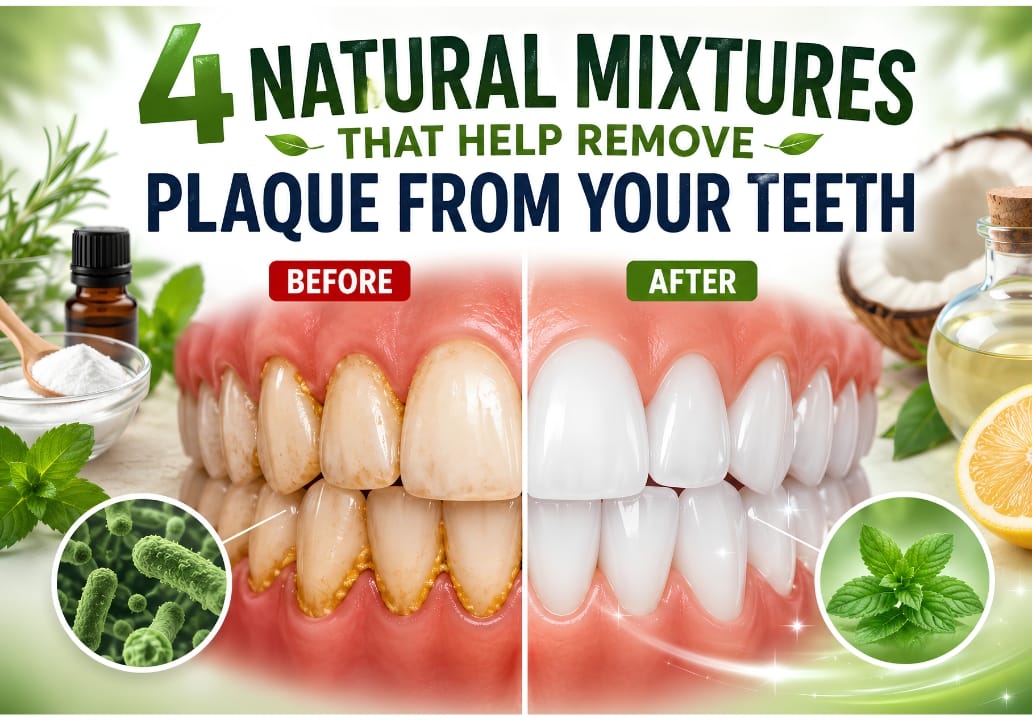
Plaque is one of the most common causes of tooth problems. It can build up on your teeth every day and may lead to bad breath, cavities, and gum disease.
The good news is that you can do a lot at home to keep plaque under control.
But there is one important fact to remember:
Natural mixtures may support oral hygiene, but they should not replace regular brushing with fluoride toothpaste, daily cleaning between your teeth, or dental check-ups.
This article explains what plaque and tartar are, how they form, and four simple home methods that people commonly use for oral care.
Important: These methods are not proven to completely remove plaque or hardened tartar. If you have a large amount of tartar, bleeding gums, pain, swelling, or loose teeth, see a dentist.
What Is Dental Plaque?
Plaque is a soft, sticky film of bacteria that forms on your teeth.
It can collect on the front, back, and chewing surfaces of your teeth. It can also build up near the gumline and between your teeth.
Plaque forms again and again during the day.
When it is not cleaned well, it can contribute to:
Tooth decay
Gum disease
Bad breath
Gum irritation
Cavities
Regular brushing helps remove plaque before it becomes a bigger problem.
What Is Tartar?
Tartar is different from plaque.
Plaque is soft. Tartar is hardened plaque.
When plaque stays on your teeth for too long, minerals in your saliva can make it hard.
This hardened material is called tartar, or dental calculus.
Tartar can form:
Above the gumline
Below the gumline
Around the base of the teeth
Unlike soft plaque, hardened tartar cannot usually be removed completely with normal brushing and flossing.
A dentist or dental hygienist may need to remove it with professional cleaning.
That is why removing plaque every day is much easier than dealing with tartar later.
How to Prevent Plaque From Building Up
The most important step is simple:
Clean your teeth every day.
Dental health organizations recommend brushing your teeth twice a day for about two minutes with fluoride toothpaste. Cleaning between your teeth once a day also helps remove plaque from areas your toothbrush cannot reach.
1. Brush Twice a Day
Brush once in the morning and once before bed.
Use a soft-bristled toothbrush and fluoride toothpaste.
Brush all surfaces of your teeth, including:
The front
The back
The chewing surfaces
Along the gumline
The American Dental Association recommends brushing twice a day for two minutes with fluoride toothpaste.
2. Clean Between Your Teeth
A toothbrush cannot clean every small space between your teeth.
Use dental floss or another interdental cleaner once a day.
This helps remove food and plaque from places that are difficult to reach with a toothbrush.
3. Replace Your Toothbrush
Replace your toothbrush when the bristles become worn or damaged.
A fresh toothbrush can help you clean your teeth properly.
4. Visit Your Dentist
Regular dental check-ups can help find problems early.
If tartar has already formed, professional cleaning may be needed.
4 Natural Ways to Support Oral Hygiene
Many people like simple, natural ingredients for personal care.
Some ingredients may help clean the mouth or reduce certain bacteria. However, natural does not always mean proven or safe for everyone.
The four methods below should be viewed as supportive home-care ideas, not replacements for fluoride toothpaste and normal dental care.
1. Rosemary and Mint Rinse
Rosemary and mint are often used in homemade mouth rinses because they have a fresh taste and smell.
What You Need
½ cup fresh rosemary
1 cup fresh mint
2 cups water
How to Prepare It
Bring the water to a boil.
Add the rosemary and mint.
Let the mixture sit for about 15 minutes.
Strain the liquid.
Allow it to cool completely.
Use a small amount as a mouth rinse.
Do not swallow it.
This type of rinse may make your mouth feel fresh, but it should not be considered a proven treatment for tartar or gum disease.
2. Coconut Oil
Coconut oil is another popular home remedy for oral care.
Some people use a practice called oil pulling, where they move oil around the mouth for several minutes and then spit it out.
How People Use It
Take a small amount of coconut oil.
Move it gently around your mouth.
Spit it out.
Rinse your mouth with water.
Do not swallow the oil.
However, coconut oil should not replace brushing with fluoride toothpaste or cleaning between your teeth.
The strongest evidence for plaque control still supports regular mechanical cleaning with a toothbrush and interdental cleaning.
3. Baking Soda: Use With Care
Baking soda is found in many oral-care products.
It can help clean the teeth because it has mild abrasive properties.
But homemade baking soda mixtures should be used carefully.
Do not scrub your teeth hard.
Too much pressure or aggressive scrubbing can hurt the gums and may damage the tooth surface over time.
A safer everyday choice is a properly formulated toothpaste that contains fluoride. Fluoride toothpaste helps clean plaque while also helping protect teeth from decay.
A Better Option
Instead of making your own toothpaste, choose a trusted fluoride toothpaste designed for daily use.
This gives you both cleaning and fluoride protection.
4. Mint for a Fresher Mouth
Mint is commonly used in toothpaste and mouth-care products because it gives the mouth a clean, fresh feeling.
You can use fresh mint as part of your diet or choose a tested oral-care product that contains mint.
But remember:
Fresh breath does not always mean healthy teeth.
Bad breath can sometimes be linked to plaque, gum disease, tooth decay, dry mouth, or other problems.
If bad breath continues even after good oral care, talk to a dentist.
Can These Natural Mixtures Remove Tartar?
No home mixture can be guaranteed to completely remove hardened tartar.
This is an important difference between plaque and tartar.
Plaque
Soft
Sticky
Forms every day
Can be removed with proper brushing and interdental cleaning
Tartar
Hard
Mineralized
Can build up around the gums
May require professional dental cleaning
Once plaque becomes tartar, simply brushing harder is not the answer.
In fact, brushing too hard can hurt your gums.
If you can see hard yellow or brown deposits on your teeth, ask a dentist or dental hygienist about professional cleaning.
The Best Daily Routine for Healthy Teeth
If you want a simple routine, follow these basic steps.
Morning
Brush for about two minutes with fluoride toothpaste.
Clean every surface of your teeth.
During the Day
Drink water regularly and limit frequent sugary foods and drinks.
Sugar can increase the risk of tooth decay.
Evening
Clean between your teeth once a day.
Then brush your teeth again for about two minutes with fluoride toothpaste.
After brushing, spit out the toothpaste rather than rinsing immediately with water. This helps keep fluoride on the teeth for longer.
Regularly
Visit your dentist for check-ups and professional cleaning when needed.
Frequently Asked Questions About Dental Plaque
What is the fastest way to remove plaque from teeth?
The most reliable way is to brush your teeth twice a day with fluoride toothpaste and clean between your teeth every day. This helps remove plaque before it becomes hardened tartar.
Can baking soda remove plaque?
Baking soda can be found in some tooth-cleaning products, but homemade baking soda should not replace fluoride toothpaste. Avoid aggressive scrubbing because it can irritate your gums and damage your teeth.
Can coconut oil remove tartar?
There is not enough evidence to say that coconut oil can completely remove hardened tartar. Tartar may require professional dental cleaning.
Can I remove tartar at home?
Do not try to scrape hard tartar from your teeth with sharp tools. You can injure your gums or damage your teeth. A dentist or dental hygienist can remove hardened tartar safely.
How often should I brush my teeth?
For most people, brushing twice a day for about two minutes with fluoride toothpaste is recommended.
Should I floss every day?
Yes. Cleaning between your teeth once a day helps remove plaque and food from areas that a toothbrush may miss.
Is natural toothpaste better than fluoride toothpaste?
Not necessarily. For daily cavity protection, fluoride toothpaste has strong evidence behind it. The American Dental Association recommends fluoride toothpaste for regular brushing.
Final Thoughts
A healthy smile does not need a complicated routine.
The most important habits are simple:
Brush twice a day.
Use fluoride toothpaste.
Clean between your teeth every day.
Limit frequent sugary foods and drinks.
Visit your dentist regularly.
Natural ingredients such as mint, rosemary, and coconut oil may be interesting additions to your personal-care routine, but they should not replace proven dental care.
And remember one simple rule:
Plaque is easier to prevent than tartar is to remove.
Take care of your teeth every day, and your future self will thank you for it.
Disclaimer: This article is for general education only. It is not a diagnosis or a substitute for professional dental advice. If you have persistent pain, swelling, bleeding gums, loose teeth, severe sensitivity, or significant tartar buildup, consult a qualified dentist.

Building stronger digital visibility, smarter marketing systems and meaningful growth opportunities for businesses across industries.
BE VISIBLE. BE RELEVANT. BE REMEMBERED.